Country
 Kingdom of Hungary
 Austrian Empire
 Austria-Hungary
County
 Bratislava/Pressburg
Status/Titles
ancient nobility
knight/vitéz
baron
Clan
Obony/Abony
Century
12th century
Origin
Czech guests/free courtiers
Nobility
1299
First documented ancestor
Mauricio, son of Michael de Nagyabony
Century
15th century
Branches
Morocz de Nagyabony - senior branch
Morocz de Beketfalva - junior branch
Internal links
External links
The Mórocz family, also known as Mórócz, is a old Hungarian noble family from the northern part of the Kingdom of Hungary (today's southwest Slovakia). Several members of the family held significant positions in the Habsburg monarchy. The Mórocz family were consistently loyal to the Habsburg monarchs.
📜 Discover the Secrets of the Mórocz Family
Watch the documentary video and listen to the podcast
about the ancient nobility from Veľké Blahovo.

Hungarian noble
History
The origin of the Mórocz family is not unknown, as they demonstrably belonged to the ancient Abony clan. Members of this lineage obtained land in the Abony area (Fel-Abony, Nagyabony, today's Veľké Blahovo) as early as the 12th century as free warriors from King Stephen III. This land was granted to them as a royal gift in the northern region of the then Kingdom of Hungary, which corresponds to today's southwestern Slovakia. The formal date of their elevation to the nobility is 1299. Subsequently, in the 14th century, the entire village was exempted from castle serfdom and became a curial community. The first documented ancestor of the Mórocz family of Veľké Blahovo is Mauricio, son of Michael de Nagyabony.
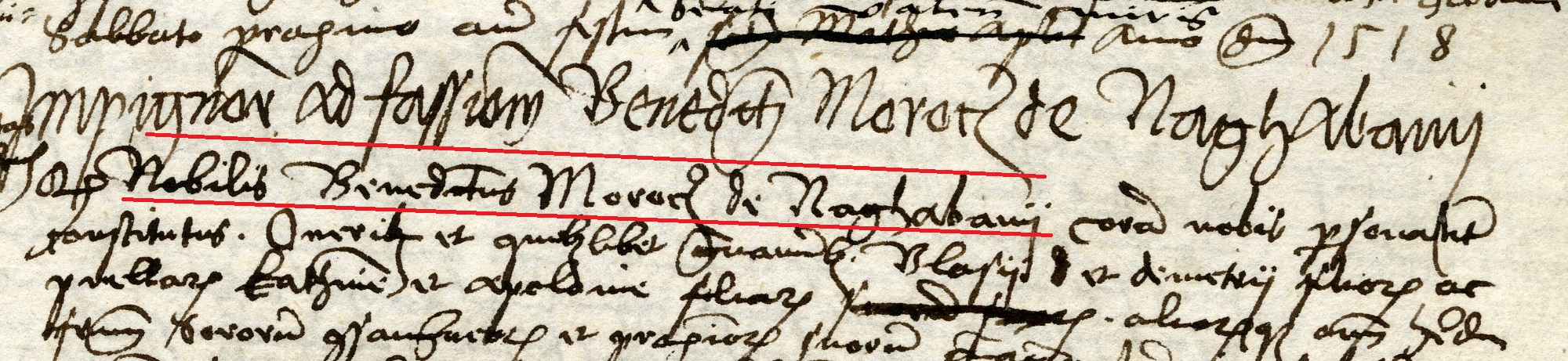
1518 - Benedictus Morocz de Naghabany
his rare record from the Bratislava Chapter dating to 1518 is key evidence of the ancient origins of the Mórocz de Nagyabony family. The document confirms that the family held estates in Velké Blahovo (Nagyabony) already in the pre-Mohács period and fully used their noble title.
The Latin text explicitly mentions the name Benedictus Morocz de Nagyabony, documenting the continuity of noble status and land ownership on Rye Island (Žitný ostrov) as early as the beginning of the 16th century.
Mauricio’s son, Benedict, was the first to adopt the surname "Morocz", derived from his father’s given name. Archival sources record his full designation as nobilis Benedictus Morocz de Naghaban. Benedict is generally regarded as the progenitor of the Mórocz lineage associated with Velke Blahovo.
The Mórocz family eventually divided into two distinct branches:
Mórocz de Beketfalva – the younger yet socially prestigious branch
Mórocz de Nagyabony – the elder and original branch
This bifurcation reflects both chronological and social distinctions within the lineage.
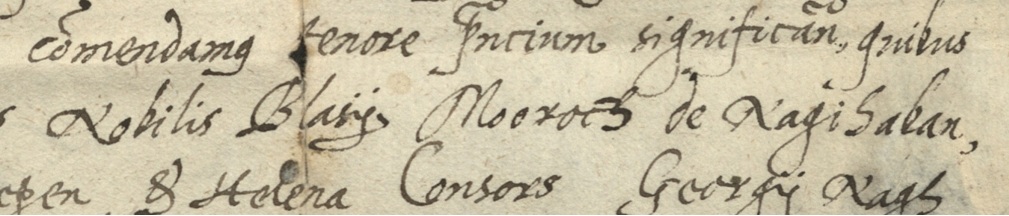
1577 - Blasius (Balázs) Morocz de Nagyabony
significant archival record from the Pressburg Chapter (Bratislavská kapitula) dated 1577 serves as a precious testament to the next generation of the Mórocz de Nagyabony lineage. This charter confirms the family's continuity and unwavering standing within the social order of the Great Rye Island (Žitný ostrov).
The Latin entry explicitly records the son of Benedict, Blasius (Balázs) Morocz de Nagyabony, documenting the transfer of noble privileges and land rights in the second half of the 16th century.
Mórocz de Beketfalva
Antonius and his father Petrus received a coat of arms and title from Maximilián II. in 1572 for faithful service. Since 1578 they have been the owners of a property in Beketfalva and the full surname of the family became Mórocz de Beketfalva. Beketfalva being a small village east of Bratislava (Hungarian: Pozsony, German: Pressburg), now capital of Slovakia. Antonius's wife was Anna Bessenyei de Galántha, the sister of Ilona Bessenyei de Galántha, the wife of Benedict Zerhas de Zerhashaz.
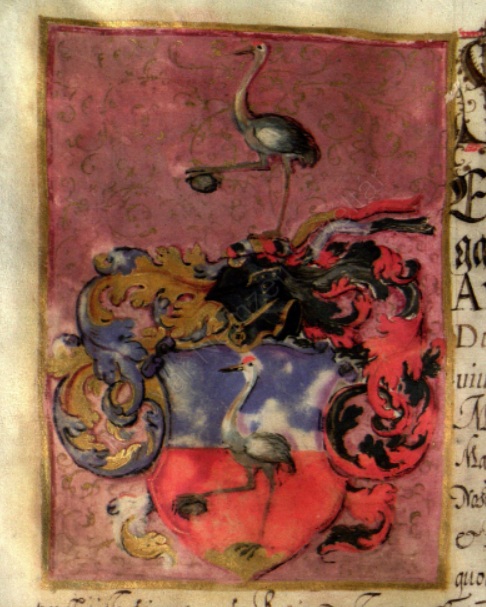
1572 - Coat of Arms of Morocz de Beketfalva
he coat of arms of the noble Mórocz de Beketfalva family, granted in 1572 to Anton and his father Peter, reflects their loyal service to the Monarchy. The blue and red divided shield features a silver crane standing on a green triple hill, clutching a stone in its raised foot – a heraldic symbol of vigilance and readiness to protect the family's honor.
Above the crowned helmet with ornate mantling, the crane appears again in the crest, confirming the noble status of the branch that settled in Beketfalva from 1578 and made its mark on the history of Pozsony County.
Mórocz de Nagyabony
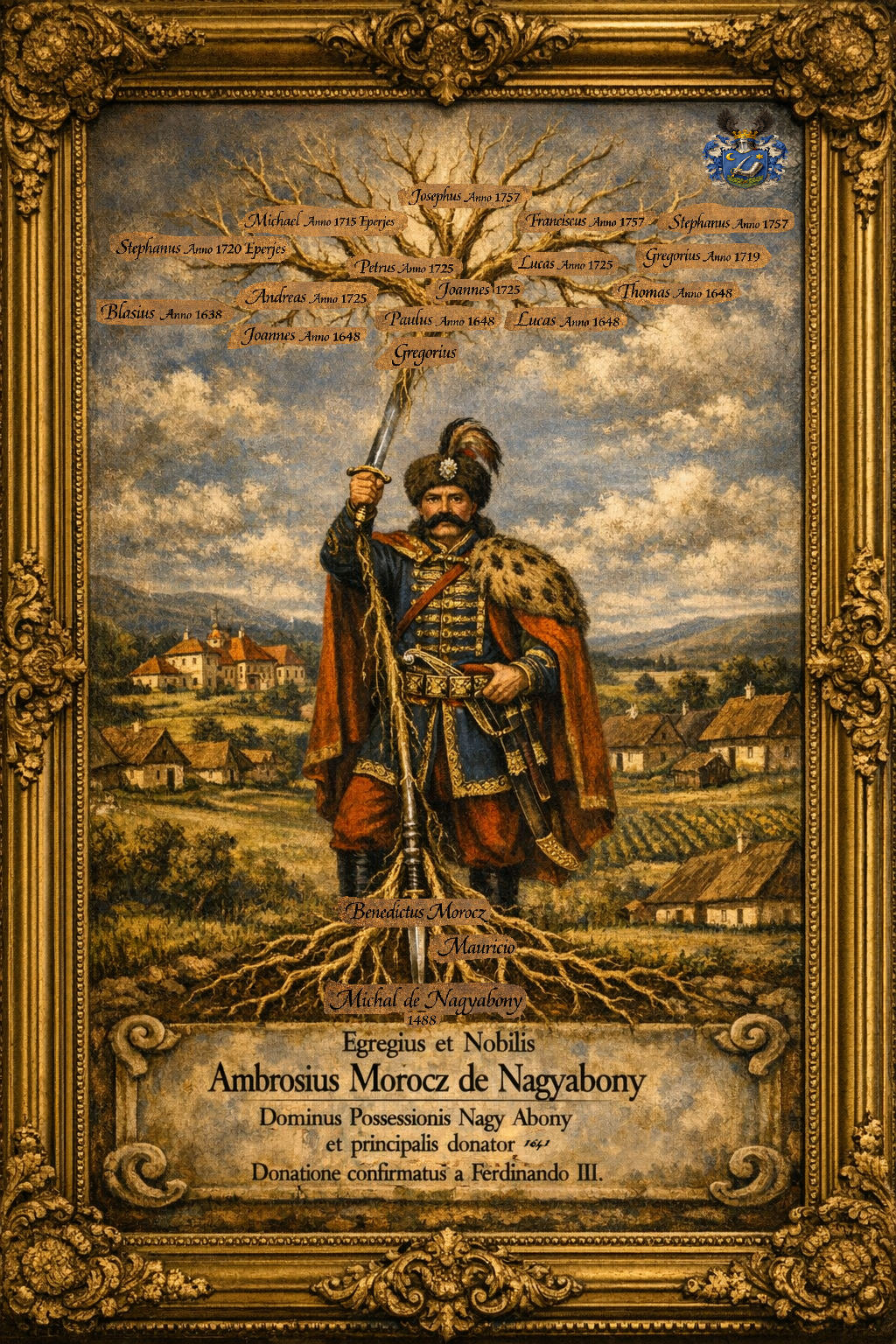
The Mórocz de Nagyabony branch represents a tribal, deeply rooted medieval curial nobility that successfully maintained its privileges until the modern era. The Beketfalva branch separated from the original line in the 16th century. Members of the Nagyabony branch were landowners in Nagyabony, and the entire family bore the surname Mórocz de Nagyabony (for 860 years). In 1641, Ambróz Mórocz, titled as egregius ac nobilis, obtained a donation for the entire district of Veľké Blahovo (co-ownership with related families), referred to in Latin as processus inferior insulanus. While Ambróz's donor branch retained its ancient family coat of arms, in 1651 Emperor Emperor Ferdinand III. granted a new coat of arms to the younger Michael branch. The family also maintained a sub-branch in the village of Eperjes (today's Pozsonyeperjes).
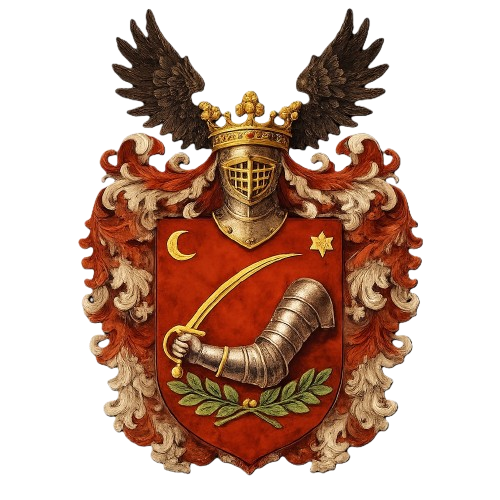
Ancient version of the Morocz de Nagyabony coat of arms
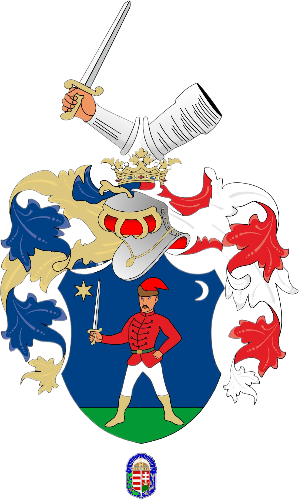
he new armorial patent, granted in Vienna in 1651 by Emperor Ferdinand III, brought a significant change to the heraldic symbolism of the Mórocz de Nagyabony lineage. The central motif of the azure shield became a vitéz (warrior) in full armor, proudly clutching a drawn sword in his right hand, symbolizing the family's readiness and military merit.
The history of the family, however, is bound to two forms of heraldic representation. Alongside this new grant, part of the family remained faithful to the ancient version of the coat of arms, which alluded to the deeper roots of their ancestors. Thus, the Mórocz family utilized both variants over the centuries – while some lineages adopted the warrior symbol of 1651, others continued to proudly seal their documents with their original, ancient insignia.
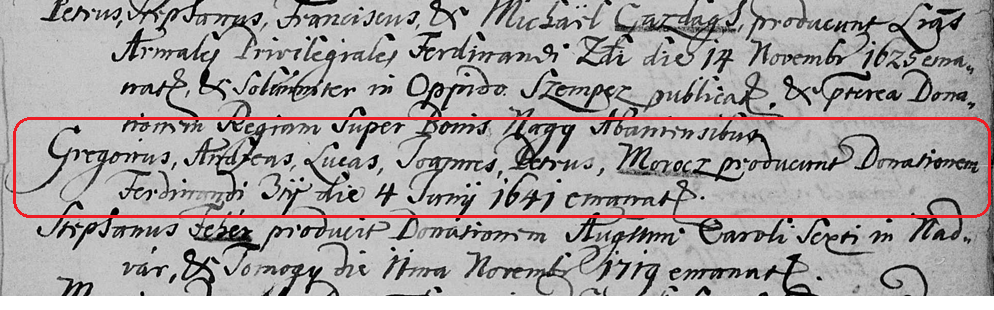
1641 - Donatio - Mórocz family
his archival entry documents a royal donation (Donationem) issued by the monarch Ferdinand III on June 4, 1641. The deed confirms the property claims of members of the Mórocz family to the estates in Veľké Blahovo (Super Bonis Nagy Abanynsibus).
The text explicitly names Gregorius, Andreas, Lucas, Joannes, and Petrus Mórocz, who presented this donation as legal proof of their noble ownership.
Wolfgang Mórocz de Beketfalva
The family rose to prominence under Wolfgang Mórocz (1575–1648). During his rich career, Wolfgang was a sub-prefect of the Pressburg region, a councilor of the Hungarian Chamber, a regional sub-judge and a Hungarian vicepalatine. Nicolaus Eszterházy was Wolfgang's patron until his death in 1645. The Eszterházy family was the patron family of Mórocz family.
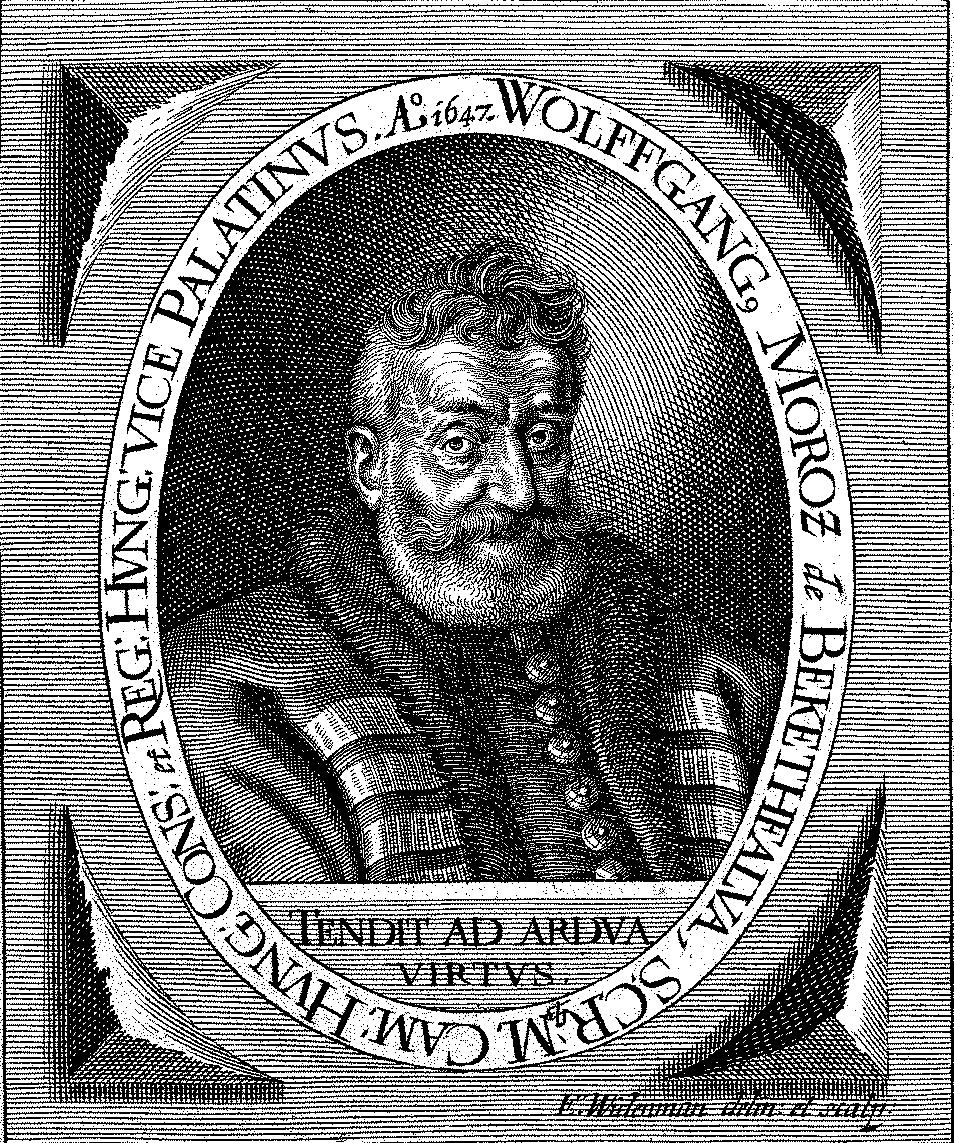
Wolfgang Mórocz de Beketfalva
Mórocz family on the battlefield
Baron Emercius (Imré) Mórocz de Beketfalva (1697– † 1758), Imperial sub-marshal, Owner of the hussar regiment. He became famous in the Battle of Cologne in 1757.
Carolus (Károly) Mórocz de Beketfalva(1700/1720 – † 1795), Hussar major. He became famous in the Napoleonic wars.
Chevalier (vitéz) Andreas (András) Mórocz de Nagyabony (1891-1958), Hero of WW1, Commander of the attack unit. He became famous in the Battle of Jagodina in 1914. He was knighted, Member of The Order of Vitéz.
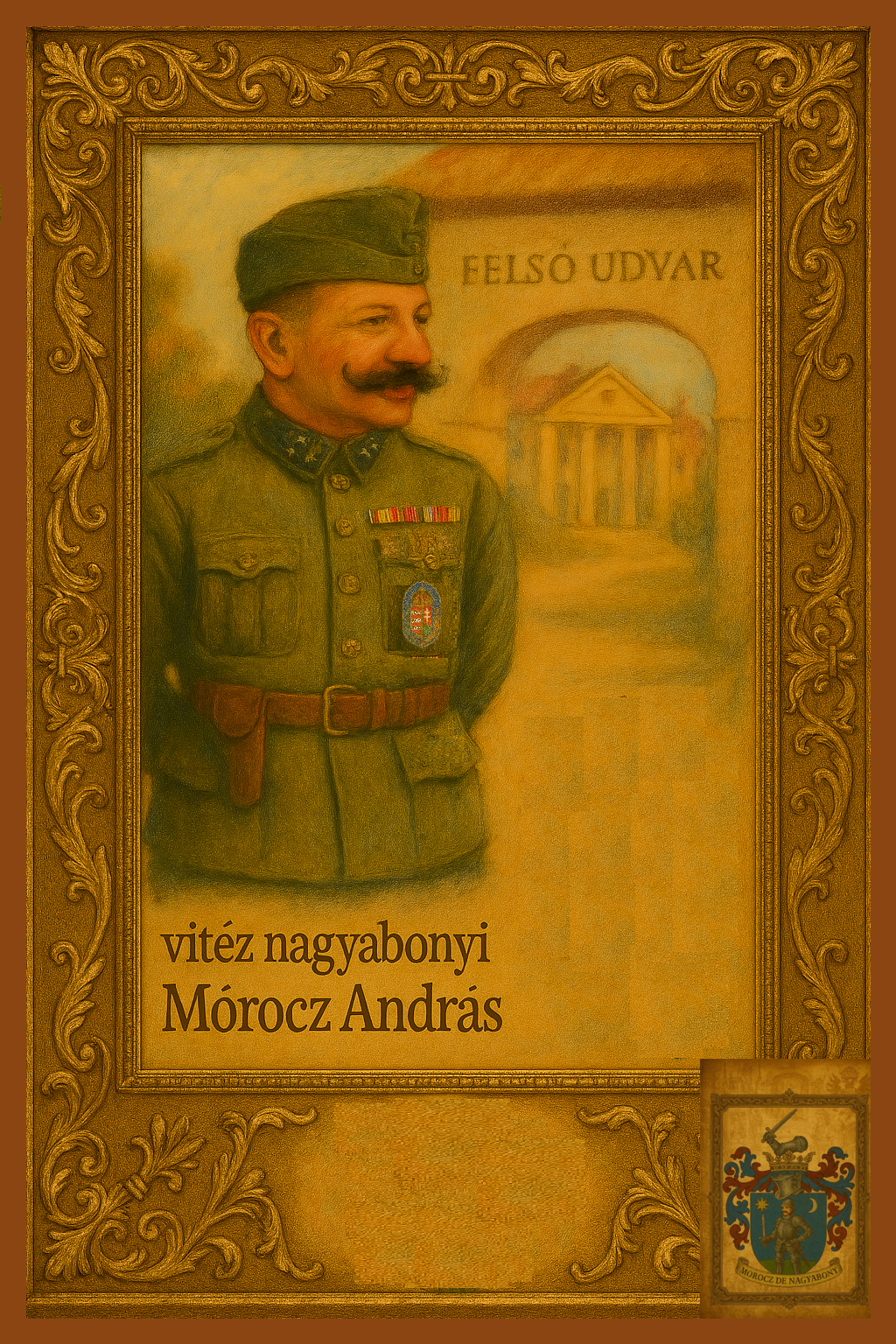
Vitéz Andreas Mórocz de Nagyabony
The Mórocz family in the present
Róbert Mórocz, the continuator of the family tradition today is Róbert Mórocz (* 1985, Bratislava), unofficial full name Knight (Hung. vitéz) Ján Róbert Mária Mórocz de Nagyabony (Ger. ritter von, Hung. vitéz nemes). Róbert is a direct descendant of the Ambróz donor branch of the family, which has preserved its ancient origin and coat of arms for centuries. Róbert inherited the title of knight from his great-grandfather, Knight András Mórocz de Nagyabony (* 1891 – † 1958). He was knighted by Joseph Karl von Habsburg-Lorraine, Archduke of Austria and Crown Prince of Hungary, as the hereditary successor of the lineage in 2022 in Máriapócs (Hungary). Róbert is a member of the Order of Vitéz. His wife is Dame Andrea Resek (married Mórocz Reseková), whose great-great-grandfather Karl Reszek was a long-time mayor in Malacky (1856 – 1867), a town west of Bratislava.
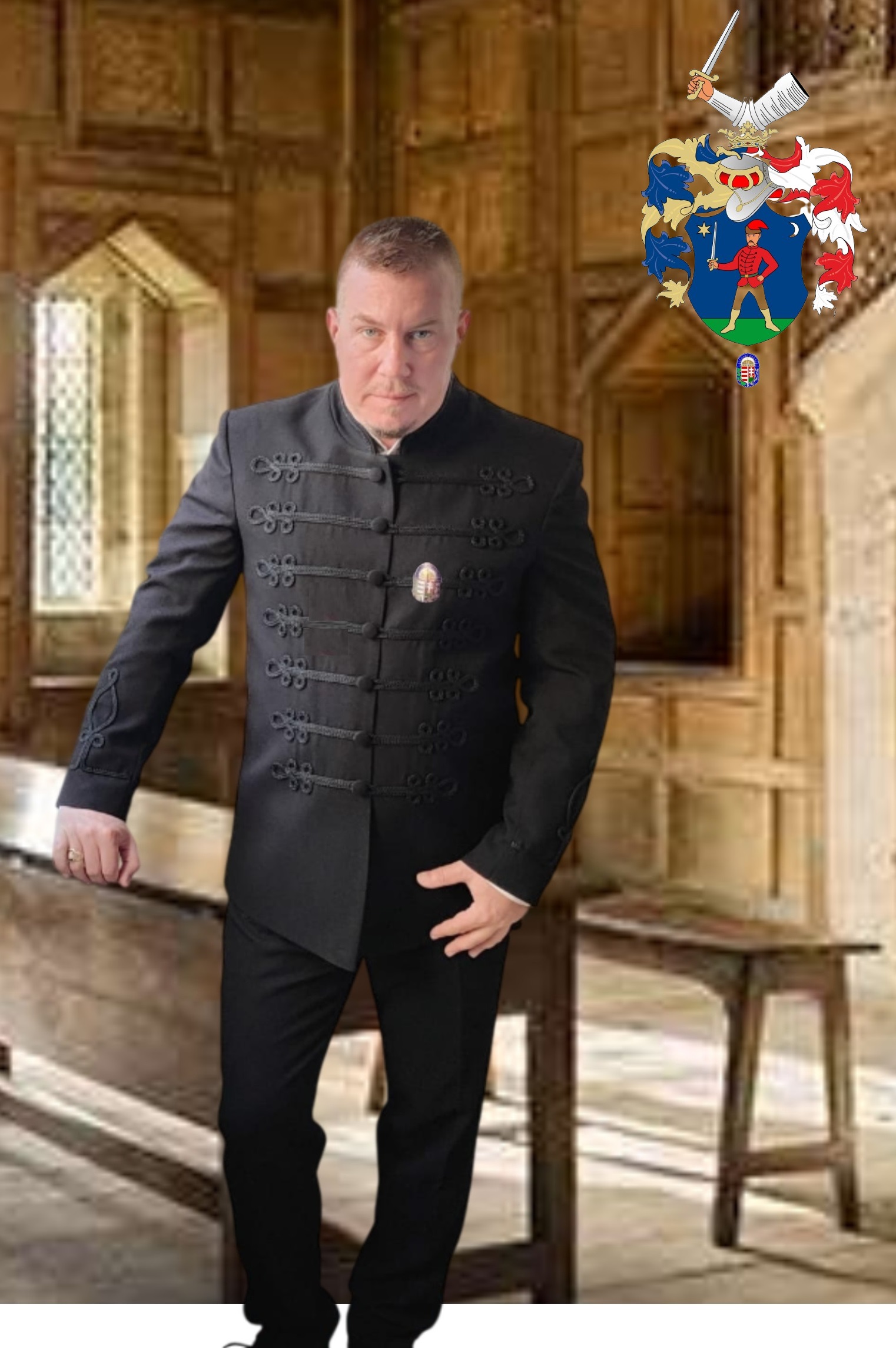
Vitéz Róbert Mórocz de Nagyabony
Genealogical Lineage of the Noble House
Mórocz de Nagyabony
“Ambróz's immediate family”
Ask / Share
Would you like to share your knowledge about the Mórocz family, or do you have any questions regarding this lineage? Send us a message.
Chcete sa podeliť o svoje poznatky o rode Mórocz alebo máte otázku ohľadom tohto rodu? Napíšte nám správu.