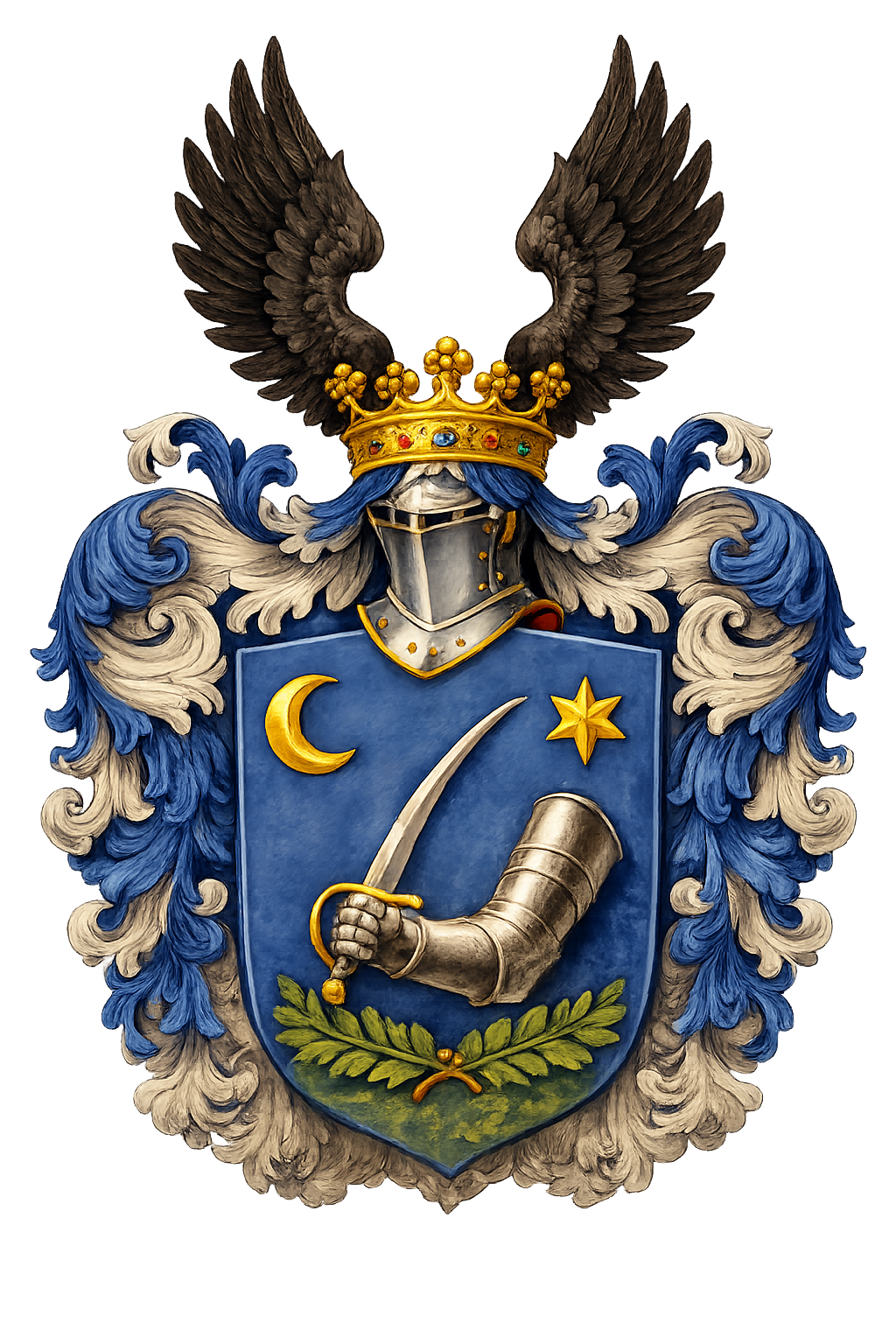
Noble Tradition on the Rye Island
The Mórocz family of Jahodná represents a sub-branch of the ancient Mórocz de Nagyabony lineage, which belonged to the Hungarian nobility with a rich history. This branch settled in the picturesque village of Jahodná (Eperjes), located in the upper part of the Rye Island (Csallóköz). Their arrival at the Tomášikovo (Tallós) estate, managed by the powerful Eszterházy family, dates back to the early 18th century. As landowners, farmers, and property holders, the Mórocz family became a firm part of the economic and social life of the region. In Jahodná, they established two main ancestral branches:
Stephen's branch
Michael's branch
Stephen and Michael were the sons of John and grandsons of the primary donor and co-owner of Veľké Blahovo, Ambróz Mórocz.
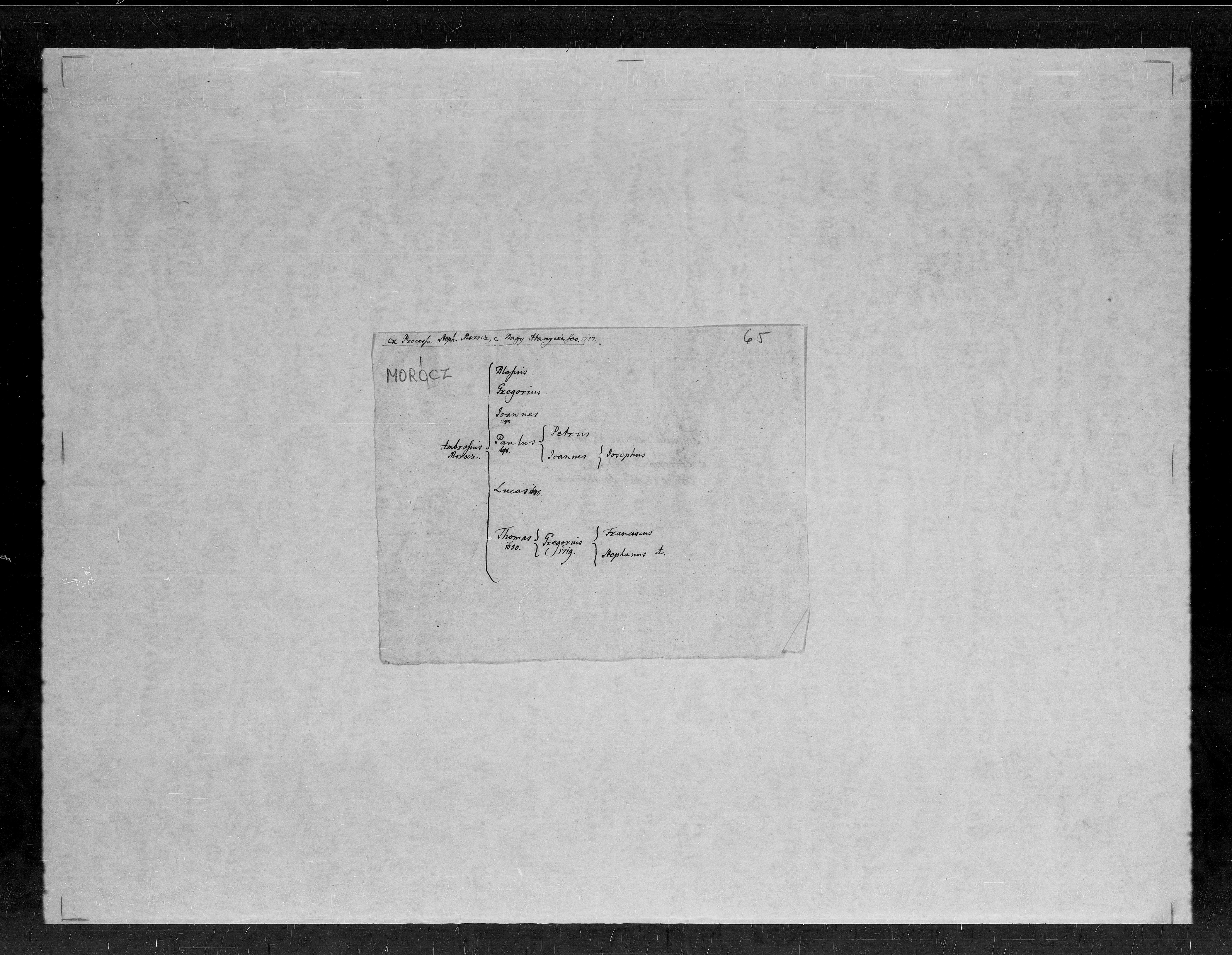 1757 - Family tree of the immediate family of Ambróz Mórocz de Nagyabony
The historical document titled „Ex Processu Steph. Morocz, c. Nagy Abonyenses 1757“ represents key genealogical evidence of the family's origin. This manuscript confirms the direct line of succession, which is essential for the Jahodná branch of the family. The central figure of the scheme is Ambróz Mórocz (Ambrozius Morocz), who served in the 17th century as the primary donor and co-owner of Veľké Blahovo. It is evident from the document that Ambróz had a son named John (Joannes), listed with the year 1648. It is precisely this line that leads to the founders of the sub-branch in Jahodná.
Historical Context
The beginning of the 18th century was a period of recovery after the Ottoman Wars and anti-Habsburg uprisings. Gentry families, such as the Mórocz family, played a key role in stabilizing the economy and developing agriculture on the fertile soils of the Rye Island (Csallóköz). Their estates and farmsteads became centers of life, where tradition merged with modernization.
Unknown Reasons for the Move to Jahodná
Although we know that the Mórocz family of Jahodná – a sub-branch of the Mórocz de Nagyabony lineage – settled in Jahodná at the beginning of the 18th century, the exact reasons for their arrival in Jahodná remain unclear. Historical sources do not state whether it was a strategic decision, an economic opportunity, or family ties.
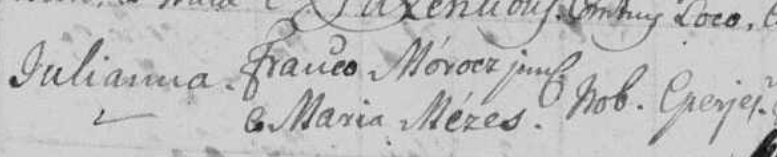 1799 Register Entry - Franciscus Mórocz, Nob. (Nobilis, Noble) Eperjes
The record captures the baptism of daughter Julianna, whose father was Franco (Franciscus) Mórócz, a member of the Michael branch of the family, and mother was Mária Mézes. The Latin abbreviation 'Nob.' next to the father's name explicitly documents their noble legitimacy at the time.
Possible Historical Connections
The beginning of the 18th century was a period of fundamental change for the Kingdom of Hungary. After the end of Rákóczi's War of Independence (1703–1711) and the conclusion of the Peace of Szatmár, the situation stabilized. The powerful Eszterházy family, which managed the Tomášikovo (Tallós) estate, sought new economic opportunities and required reliable noble farmers to restore territories devastated by war.
The Mórocz family came to Jahodná as hospes – invited settlers or managers, whom the landowners attracted to the fertile lands of the Rye Island. This system was common in Hungary: hospites received benefits such as lower taxes or land for cultivation in exchange for stabilizing and developing the estate.
Another possible cause for resettlement could have been the destruction of the family's original estates in Nadvár (Nádvár) during the Ottoman incursions. Regions of southern and central Hungary were significantly devastated in the 17th century, forcing many noble families to seek new seats in safer regions. Equally likely is an internal division of property within the Mórocz de Nagyabony lineage, which could have led to the formation of an independent branch settled in Jahodná.
 1840 Register Entry - Anton Mórócz, noble farmer of Eperjes
Baptismal register entry from November 23, 1840. The child's father was Anton Mórocz, titled as "nemes eperjesi gazda" (noble farmer of Eperjes), originating from the Stephen branch of the family. This nobleman was also the grandfather of the later prominent family member, vitéz András Mórocz, thus confirming the direct lineage.
Confirmation of the Ancestral Line from 1823
The document, issued on May 22, 1823, in Veľké Blahovo (Nagy Abony), represents key evidence acknowledging the blood kinship and noble origin between the branches of the Mórocz family. The deed officially confirms the ties of the family members living in Jahodná (Eperjes) to their common ancestors.
The text names the following as true blood relatives:
• Stephen Mórocz (son of Stephen),
• John, Francis, and Anton (sons of John),
• Francis, Ignatius, and Michael (sons of Francis).
All these men are identified in the document as direct descendants and grandsons of the late Stephen Mórocz and Michael Mórocz. The signatories of the deed emphasize that this kinship is indisputable and consider it their duty to publicly attest to it with their own signatures.
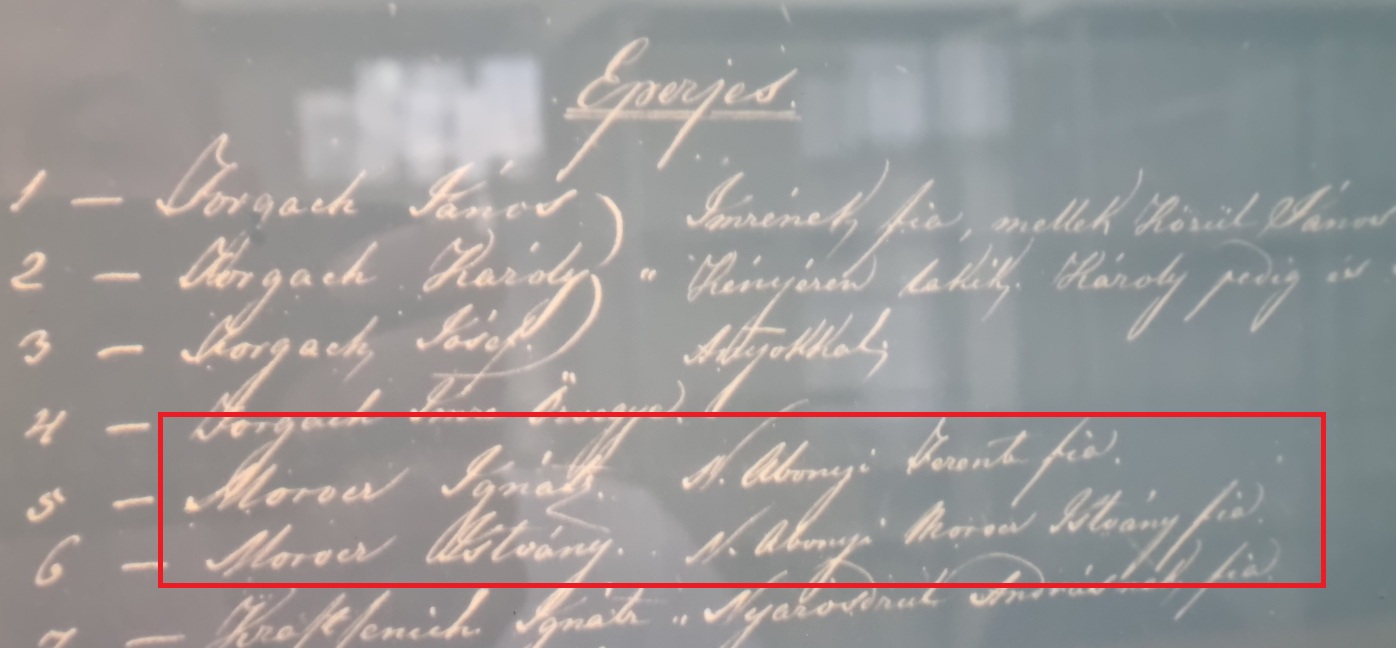 1823 - Noble Register in Jahodná
This period document presents the official list of nobles active in the village of Jahodná (Eperjes). The section highlighted in the red box is key evidence of the origin of the Jahodná branch of the Mórocz family; the list includes Ignatius Mórocz, clearly identified as the son of Francis from Veľké Blahovo, and Stephen Mórocz, identified as the son of Stephen from Veľké Blahovo. The entry definitively confirms the direct link between the Jahodná families and their ancestral seat in Veľké Blahovo (Nagyabony). These data are in full accordance with other documents deriving this line from Ambróz Mórocz, the primary donor and co-owner of the ancestral estates. Given the proven direct line to the donor branch, the Jahodná branch had a legitimate claim to use the noble predicate 'de Nagyabony'. The document thus served as an official confirmation of their noble identity and legal continuity in the Rye Island region.
An interesting aspect of the document is the position of Baláž Mórocz, whose signature appears first. Given that he signed with his full name and first in order, he can be considered the head of the family at that time or the oldest living member, who confirmed the noble identity of his relatives with his authority.
This status is also confirmed by period registers, where Baláž Mórocz (Blasius) is listed as a nobilis compossessor—a noble co-owner of estates in Veľké Blahovo. This entry is clear proof that this is the direct donor branch after Ambróz Mórocz, confirming the continuity of land ownership and the family's privileged status in the region.
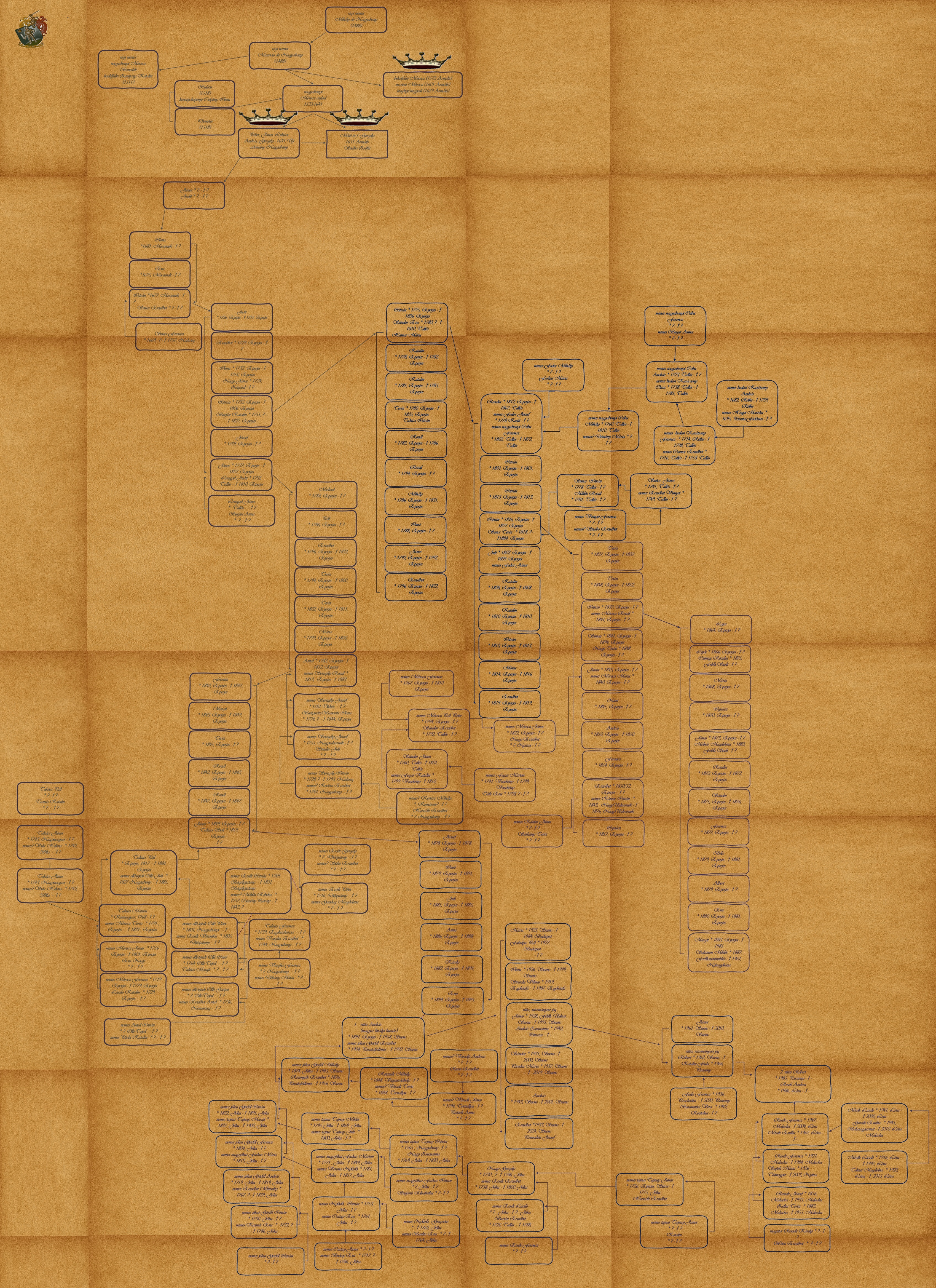 Mórocz Family Tree, Bratislava County, Jahodná Branch
The family tree begins with the donor Ambróz and captures 3 generations of the Mórocz family from Jahodná.
At the bottom of the deed, prominent representatives of the family are listed: Baláž Mórocz, John Mórocz, Charles Mórocz, Charles Mórocz Jr., and Gabriel Mórocz. This document definitively sealed the continuity of the noble status of the Jahodná branch even in the 19th century.
Family and Marriage Ties of the Mórocz Family of Jahodná
The Mórocz family of Jahodná, as a sub-branch of the Mórocz de Nagyabony lineage, strengthened its position during the 18th and 19th centuries not only through economic activities but also through marriage alliances with ancient gentry families of the region. These unions were typical for the Hungarian nobility, ensuring property continuity, social status, and political influence.
Among the prominent families with whom the Móroczs were allied were:
• Csiba de Nagyabony
• Ollé de Ollé-Tejed
• Görföl de Nagy-Jóka
• Karácsony de Hodos
• Csomor de Nagyabony
• Krascsenics de Nyárasd
• Farkas de Nagy-Jóka
• Buday
• Dékány
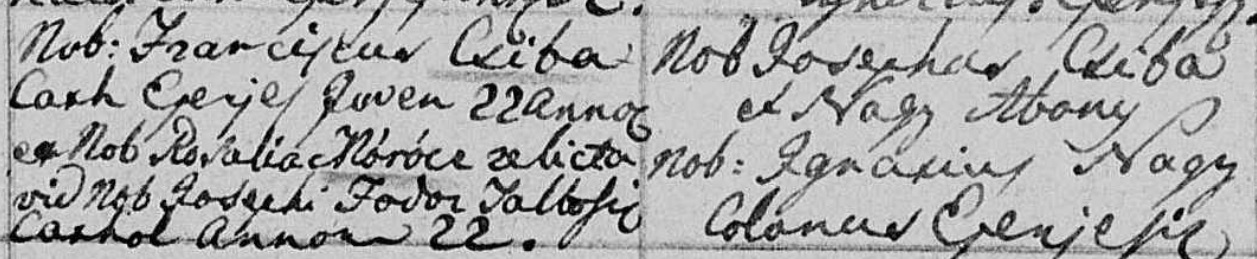 1829 - Marriage record between members of the Csiba family of Veľké Blahovo and the Mórocz family of Jahodná
This marriage register entry from 1829 documents a significant union between two noble lines originally from Veľké Blahovo. This Latin record from the parish in Jahodná confirms the close ancestral ties between the Mórocz and Csiba families within the regional nobility of the Rye Island. The union was concluded by nobleman Franciscus Csiba of Jahodná and Rosalia Mórocz of Jahodná. The presence of witness Josephus Csiba directly from Veľké Blahovo (ex Nagy Abony) underscores the ongoing continuity with the original ancestral seat and the legitimacy of the noble status of both parties.
These unions created a network of ancestral alliances, which formed the foundation of stability and prestige within the noble society of the Rye Island (Csallóköz). Interestingly, the Mórocz family also engaged in marriages between members of their own lineage, which was relatively common during that period, especially in an effort to preserve property within the family.
The Mórocz Water Mill – A Tradition Since 1800
The Mórocz family of Jahodná became famous not only for farming but also for milling, which was one of the cornerstones of their economic activity. The water mill, which became part of the family estate, was established as early as 1800 and represented a significant technical and economic element of life on the Rye Island (Csallóköz).
Water mills played a crucial role in the 19th century – they served to grind grain for local farmers and often became centers of social interaction. In a region dominated by agriculture, the mill was a strategic facility that ensured food self-sufficiency and stability.
After the First World War, the family mill was taken over by Ignác Mórocz (born 1883), who returned to farming after serving on the front. For the family, the mill was not only a source of livelihood but also a symbol of continuity – generations of the Mórocz family managed its operation and maintained a tradition that endured for centuries.
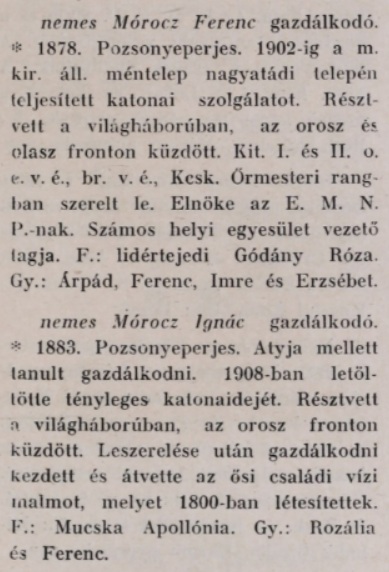 Ferenc and Ignác Mórocz of Jahodná
noble Ferenc Mórocz (born 1878): A farmer who fought in the First World War on the Russian and Italian fronts, where he received several decorations. He was the chairman of the local E.M.N.P. organization and an active member of many associations. His wife was Róza Gódány (from the de Lidértejed lineage), and they had four children together. noble Ignác Mórocz (born 1883): A farmer who learned to manage the land alongside his father. After fighting on the Russian front in the First World War, he took over and managed the ancient family water mill, established in 1800. His wife was Apollónia Mucska, and they had two children.
The Mórocz water mill is a testament to how noble families on the Rye Island combined agricultural production with technical progress, thereby contributing to the development of the region.
The Móroczs – Prominent Landowners in Eperjes as of 1891
The Mórocz family of Jahodná maintained a significant position among the gentry families of the Rye Island even at the end of the 19th century. According to records from 1891, Ferenc Mórocz and Lipót Mórocz were among the most prominent landowners in the village of Eperjes (Jahodná). Their names are listed in the Grundbesitzer (landowners) category, confirming that the family possessed extensive estates.
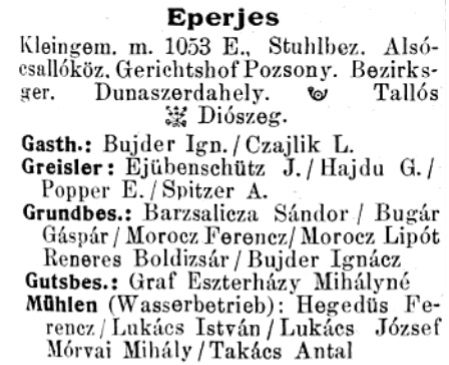 1891 - The Móroczs of Jahodná (Eperjes) are recorded among the prominent landowners in the village
The official register from 1891 provides clear evidence of the enduring social and economic influence of the Mórócz de Nagyabony family in the village of Jahodná (Eperjes). This document confirms that even at the close of the 19th century, the family maintained its position among the leading landowners in the region. In the Grundbesitzer (landowners) category, Ferencz Mórócz and Lipót Mórócz are explicitly mentioned. Their presence in this prestigious list alongside the local nobility documents the stability of the ancestral property and the uninterrupted continuity of their status as noble farmers.
An interesting fact is that the parent branch of the Mórocz de Nagyabony family from Veľké Blahovo no longer figured as a dominant landowner in its original village during this period, while the Móroczs of Jahodná managed to maintain this status. This highlights their ability to adapt to changing economic conditions.
In the 19th century, land ownership was the foundation of prestige and economic stability, allowing the family to continue the tradition of farming and maintain ties with other prominent families of the Rye Island.
András Mórocz – Hussar, Hero, and Knight of the Order of Vitéz
András Mórocz was born in the village of Jahodná (Eperjes) as a member of the noble Mórocz de Nagyabony family. His parents were John Mórocz and Sophia Takács (whose mother descended from the Ollé de Ollé-Tejed family). His grandfather was Anton, whose ancient origin and the predicate de Nagyabony were confirmed by county authorities in 1823. As a child, he moved to Senec, where he grew up with relatives from the noble Dékány family at the Horný dvor (Felső Údvar) manor.
András established his family in Senec, where Erzsébet Görföl, a member of an ancient noble family from Jelka (de Nagy-Jóka), became his wife. Her family ties extended to the prominent Tajnay de Tajna and Farkas de Nagyjóka families, once again strengthening alliances between important gentry families of the region.
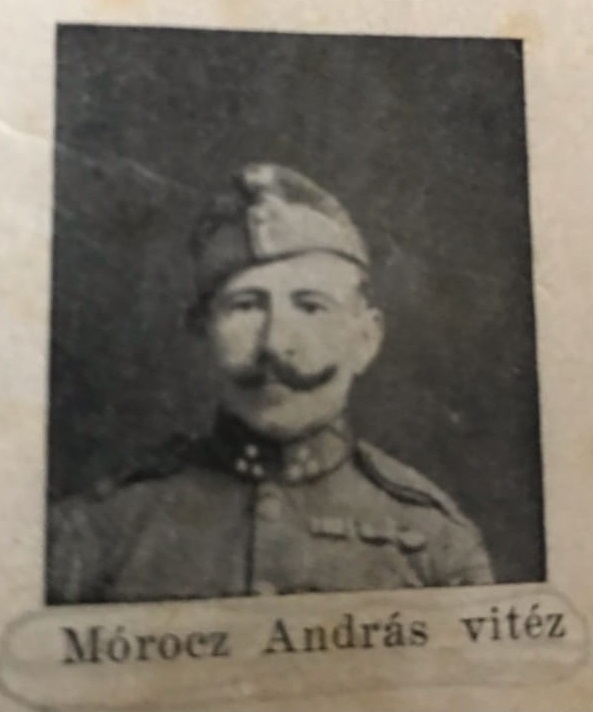 vitéz András Mórocz in 1940
This historical portrait depicts András Mórocz during the peak of his military glory, dressed in the uniform of the Royal Hungarian Hussars. The name 'Mórocz András vitéz' listed below the portrait, with the title placed after the surname, clearly confirms his social and knightly status, which he earned for demonstrated courage on the battlefield. Three stars are visible on the collar of his uniform, indicating the rank of squad leader (Sergeant), while the overall military appearance is completed by a typical field cap. Visible medal ribbons on the left side of his chest bear witness to his heroism and merits. The overall impression of military pride and membership in the elite cavalry is underscored by the upturned mustache, characteristic of the era, which was an indispensable symbol of prestige for every hussar.
After the outbreak of the First World War, he demonstrated extraordinary bravery, for which he was later awarded the prestigious title Knight of the Order of Vitéz. During the time of the Kingdom of Hungary, he served as a hussar in an elite cavalry unit. He was officially admitted to the Order of Vitéz in 1938, and in 1940, as a squad leader of the Royal Hungarian Hussars, he participated in the liberation of Transylvania.
vitéz András Mórocz de Nagyabony passed away in August 1958 in Senec at the age of 67 and is buried in the local Catholic cemetery.
Mórocz Ján Róbert Mária (born in 1985 in Bratislava) is a direct descendant of the ancient noble house Mórocz de Nagyabony. He descends from the prominent donation line of Ambróz (the Jahodná branch), whose joint manorial rights over the village of Veľké Blahovo (Nagyabony) were confirmed by King Ferdinand III. A key milestone was the year 1718, when King Charles III granted the family a letter of protection, Salva Guardia, recorded in the Royal Books (Libri Regii), thereby confirming the property and legal continuity of the lineage.
On May 24, 1823, the noble status and the predicate 'de Nagyabony' were officially confirmed for the Jahodná (Eperjes) branch as well. Róbert is the great-great-great-grandson of Anton Mórocz, whom the deed lists as a recognized direct descendant of the Mórocz de Nagyabony family. A significant ancestor is his great-grandfather, vitéz András Mórocz de Nagyabony, a hero of the First World War and a member of the prestigious Order of Vitéz.
The blood of ancient noble houses flows through the pedigree of this branch, such as Görföl of Jelka (de Nagyjóka), Ollé of Horné Mýto (de Ollé-Tejed), Farkas of Jelka (de Nagyjóka), and the Tajnay of Tajna (de Tajna) family. In 2022, in Máriapócs, Róbert was knighted as a hereditary knight (örökös vitéz) by Archduke Joseph Karl of Austria, continuing the family tradition within the order, which brings together prominent European dynasties and magnate families such as the Batthyány, Széchenyi, Pallavicini, Festetics, and others.
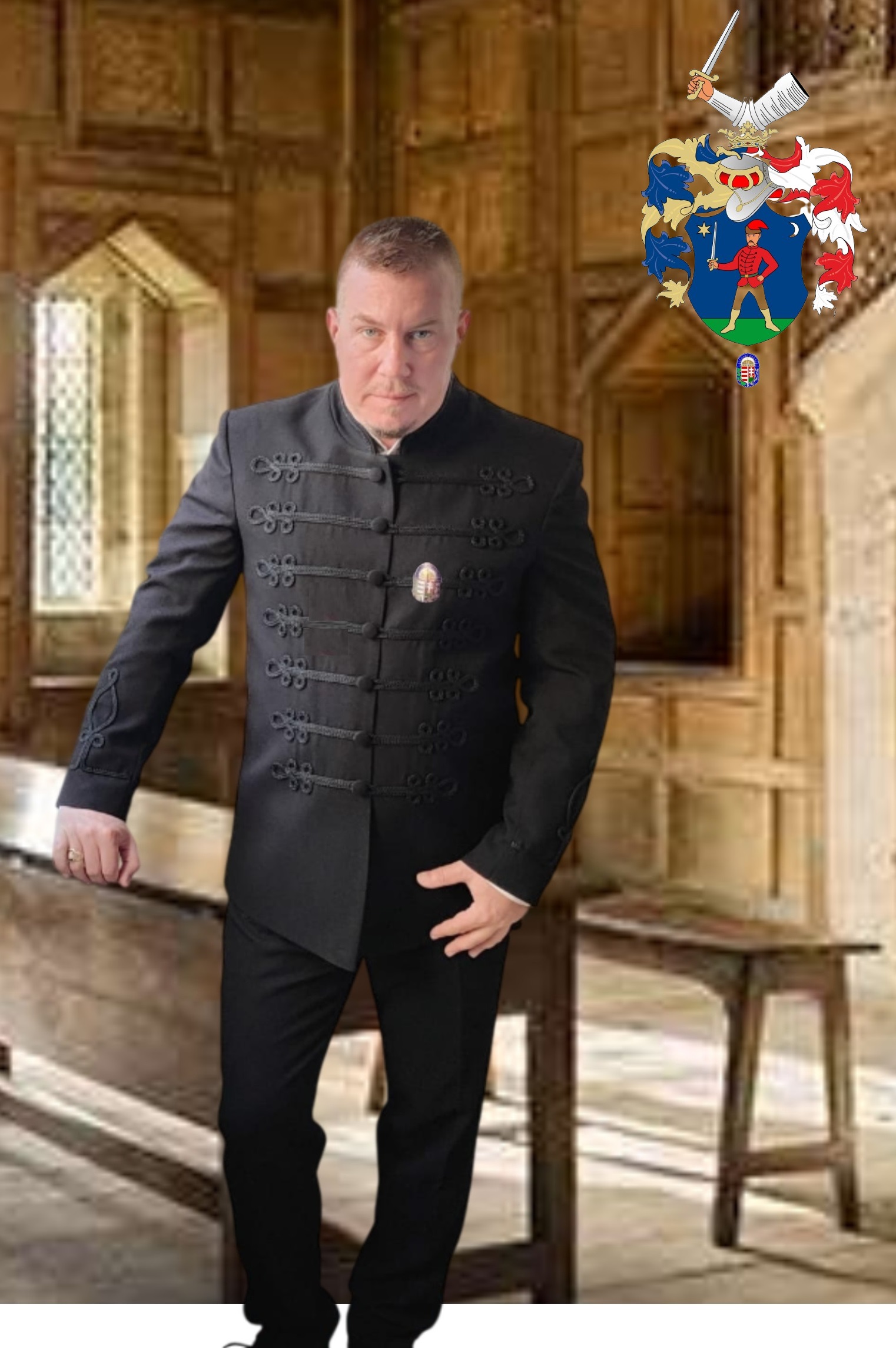 vitéz Róbert Mórocz de Nagyabony
Róbert's deep personal mission is the preservation of the name and historical honor of his family for future generations. Through active endeavor, he purposefully strives to ensure that the name Mórocz de Nagyabony is not forgotten and firmly maintains its place in the consciousness of the modern European aristocracy.
In his daily life, together with his wife, Róbert strives to cherish the heritage of his ancestors. Lady Andrea Resek (married Andrea Mórocz Resek) comes from a prominent family of local magistrates. Her great-great-grandfather, Károly (Carolus) Reszek, served for a long time as the Burgomaster of Malacky between 1856 and 1867, adding a tradition of public service and regional authority to the family line.
Róbert holds a diploma confirming his noble origin, and his family coat of arms, supplemented with the insignia of the Order, has been officially recognized and digitized by the heraldic commission.
Inquire / Share
Would you care to share your knowledge regarding the House of Mórocz de Nagyabony, or do you have inquiries concerning this lineage? Pray, send us a message.