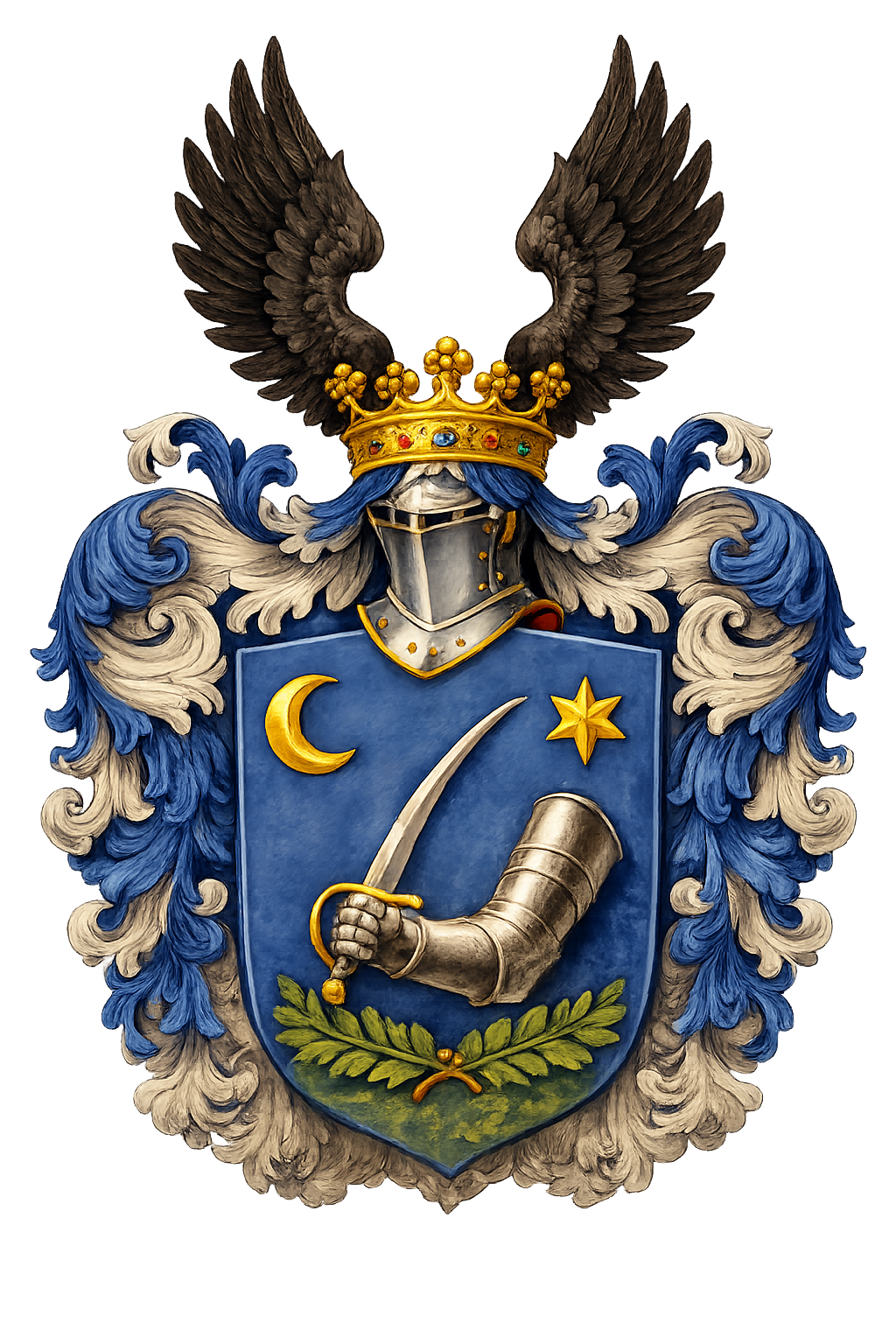
Róbert and the legacy of the house of Mórocz de Nagyabony
Ján Róbert Mária Mórocz, born in 1985 in Bratislava, is a direct descendant of the historic noble family Mórocz de Nagyabony. He hails from the prominent line of Ambróz (the so-called donative sub-lineage from Jahodná), whose collective lordship over the entire territory of Veľké Blahovo was confirmed by King Ferdinand III, thereby legitimizing their ancient medieval holdings.
A key milestone for this ancestral line was the year 1718, when King Charles III issued a letter of protection (Salva Guardia). This document, recorded in the Libri Regii, officially confirmed the possession of estates and the legal continuity of the house. The family enjoyed high esteem in the region as middle nobility of the bene possessionati type, as documented in period registers by titles such as Nobilis Compossessor (noble co-owner) or honorary addresses like Dominus and Honestus ac Nobilis.
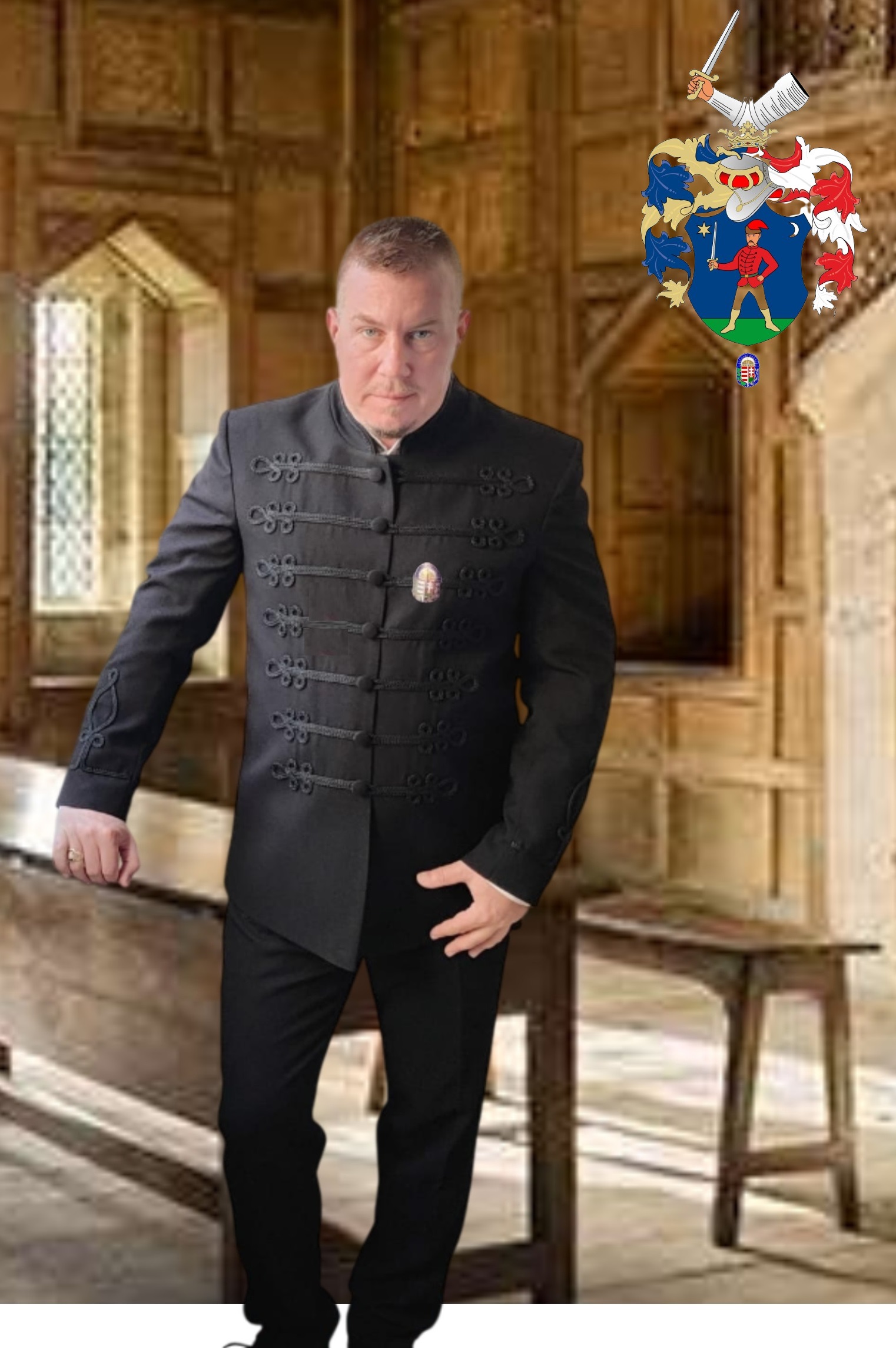 Vitéz Róbert Mórocz de Nagyabony
„In our line of the house of Mórocz, a deep sense of loyalty to the former royal dynasty continues to endure. We proudly claim the community that remains to this day under the patronage of this highly respected and influential European family, thereby preserving the living heritage of our ancestors.“ Róbert Mórocz, bearer of the family tradition
The direct continuity of the line from Jahodná (Eperjes) and its origin from Ambróz were confirmed by an extensive noble investigation. Based on this, the county authorities on May 24, 1823 officially granted the family noble status and the right to use the historic predicate de Nagyabony.
Heroism and tradition of the Order of Vitéz
His great-grandfather, Vitéz András Mórocz de Nagyabony, likewise from the branch from Jahodná, was a hero of the First World War. During the period of the Kingdom of Hungary, he became a member of the prestigious Order of Vitéz, thereby sealing the military honor of the house.
In 2022, Róbert was dubbed a hereditary knight in Máriapócs by Archduke Joseph Karl von Habsburg-Lothringen from the palatine branch. This act symbolizes the continuation of the family tradition, where the title Vitéz (knight) represents honor, valor, and service to the motherland.
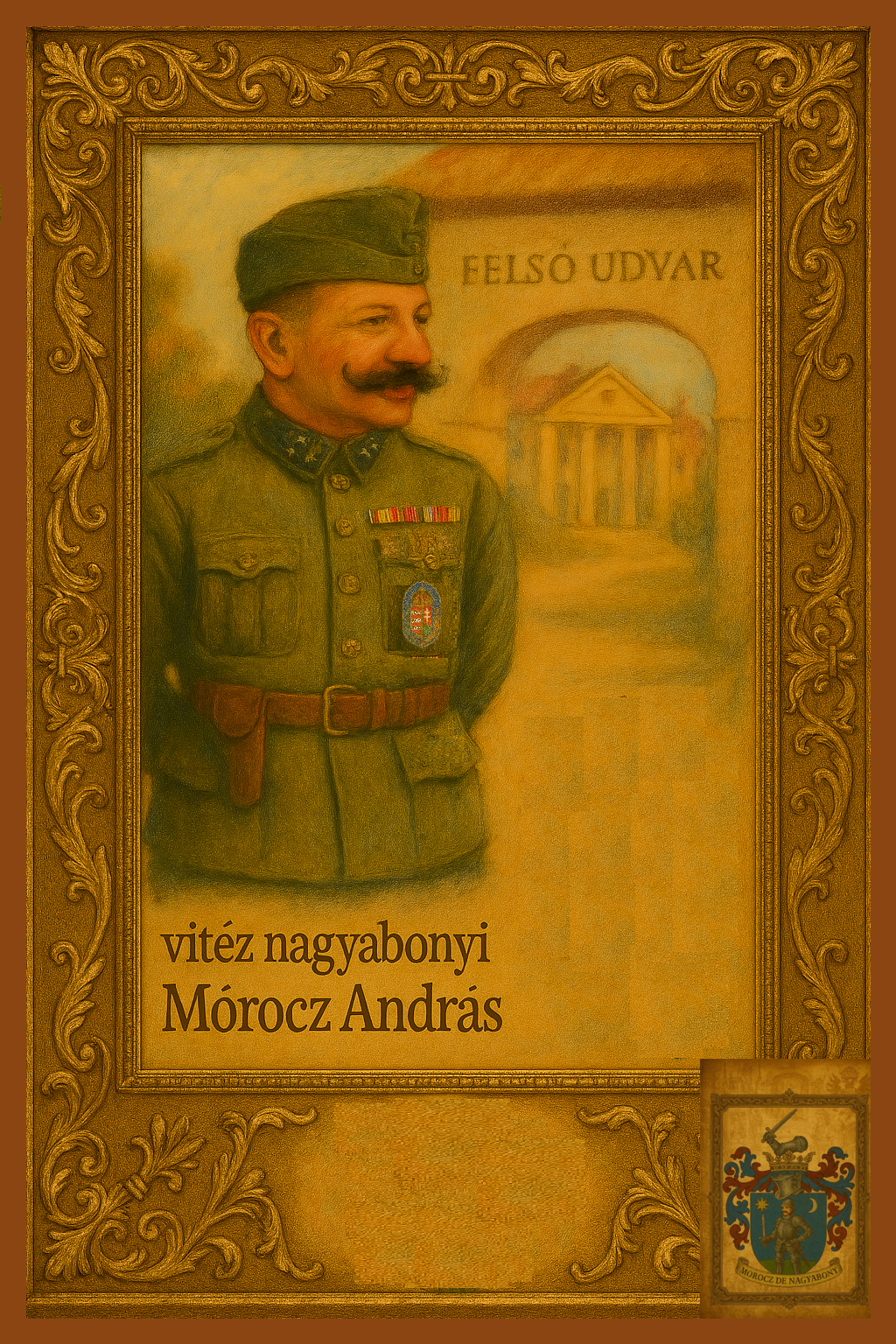 Vitéz András Mórocz de Nagyabony
Image of András Mórocz de Nagyabony approximately in the year 1940.
Family connections and European aristocracy
In the veins of the Móroczs of this line flows the heritage of old noble houses, which include Ollé de Ollé-Tejedi, Farkas de Nagy-Jóka, Tajnay de Tajna, Görföl de Nagy-Jók, Vargha de Nagyabony, Dékány de Vámosfalva, or Ersék de Gara.
The Order of Vitéz today brings together members of prominent dynasties, such as Habsburg-Lothringen, the Duke of Braganza, the Albanian Crown Prince, or the King of Rwanda. Among the noble families represented in the order are also Marquis Pallavicini, Counts Batthyány, Széchenyi, Teleki, Zichy, the Italian Counts degli Uberti and many others.
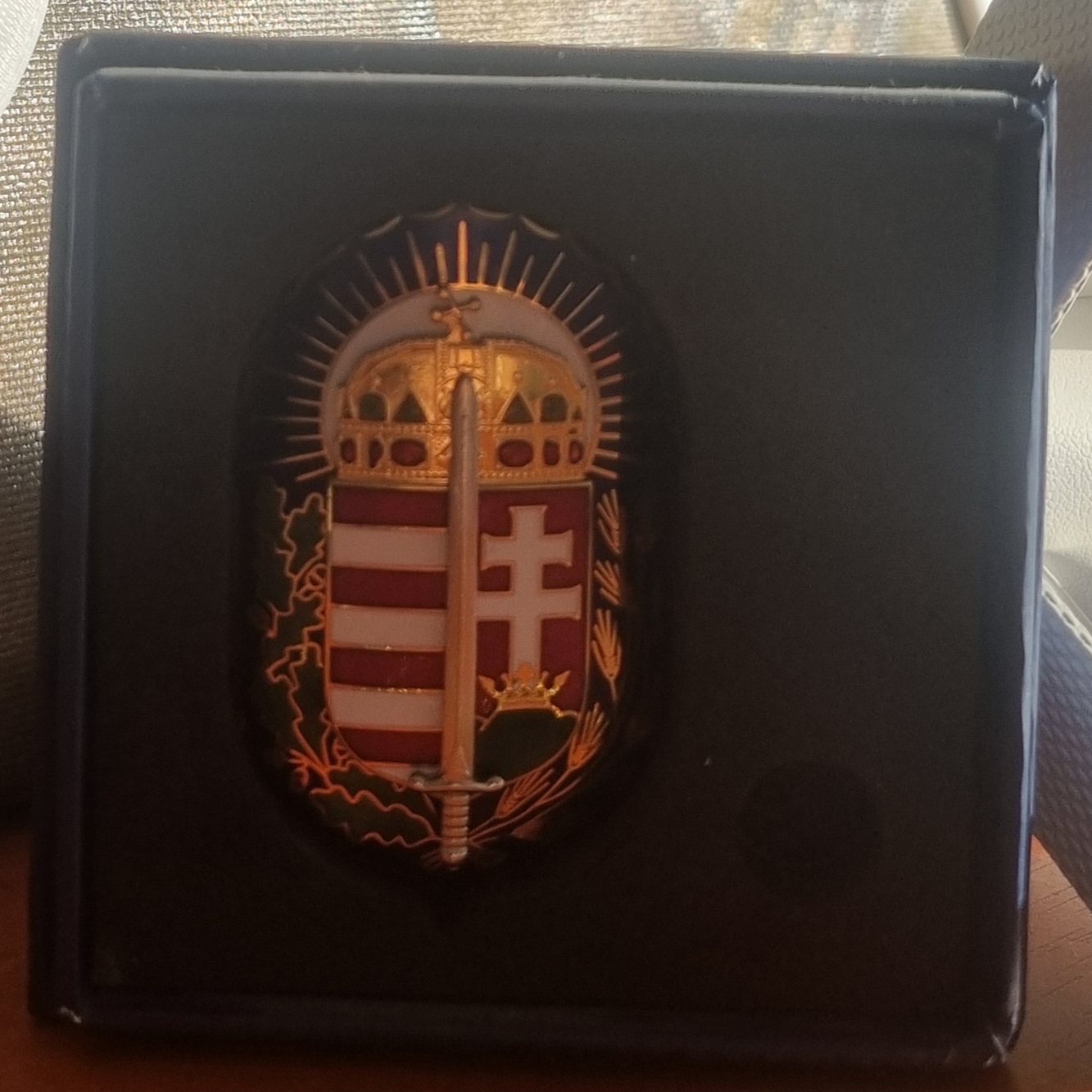 Insignia of the members of the Order of Vitéz/the sword in the center is a symbol of heredity
The insignia of the Order of Vitéz is rich in heraldic symbolism, celebrating national pride and military valor. In its center dominates the Hungarian state coat of arms surmounted by the Crown of Saint Stephen, through which a sword passes vertically as a symbol of determination to defend the motherland. The shield is flanked by ears of wheat, representing a bond with the land and prosperity, and oak branches, which are a sign of unyielding strength and heroism. The entire composition is topped by the rays of the rising sun on a blue field, symbolizing new hope and flourish.
Personal legacy and representation of the house
Róbert Mórocz is the holder of a diploma confirming his noble origin. The Heraldic Commission has officially recognized and digitized his family coat of arms, which now bears the insignia of the order. Róbert actively strives to preserve the legacy of his ancestors in his daily life, with his priority being that the name Mórocz de Nagyabony shall never fall into oblivion.
Through his activities and social presence, he ensures that this historical house remains a living and respected part of the contemporary modern aristocracy of Europe. Róbert perceives his position as a mission to represent the traditions of Nagyabony in the highest European circles, ensuring that the noble heritage of the house of Mórocz is viewed as a dynamic and enduring value even in the 21st century.
His wife, Lady Andrea Mórocz Reseková, hails from a prominent magisterial family. Her great-great-grandfather, Carolus Reszek, served between 1856 and 1867 as the long-standing Chief Magistrate of Malacky, thereby uniting two historically significant lineages of the region.
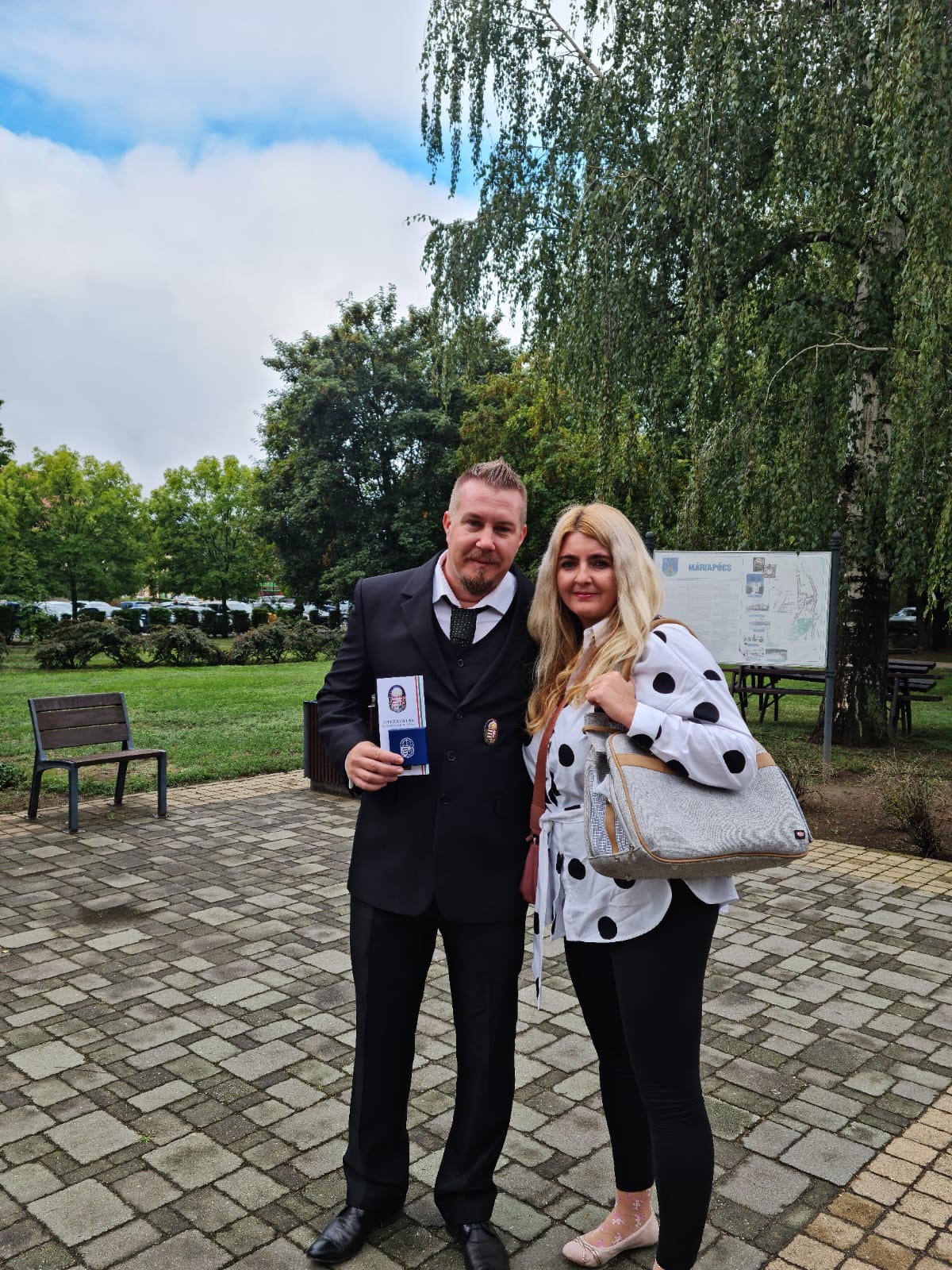 Andrea and Róbert Mórocz in Máriapócs
Andrea and Róbert Mórocz in Máriapócs in the year 2022.
The Dynastic Legitimate Order of Vitéz
The Dynastic Order of Vitéz was built upon the foundations of nearly a thousand years of Hungarian history. Even Árpád, the Chief of the Hungarian tribes, was called Vitéz, which translates as warrior, hero, or knight. In the 17th century, Count Emery Thököly de Késmárk granted the title of Vitéz and land to his bravest warriors. This acquired nobility was later recognized by the Habsburgs themselves, which explains why they remain patrons of the order to this day.
The Hereditary Order of Vitéz was restored on these foundations in 1920 by the Regent of the Kingdom of Hungary, Vitéz Miklós Horthy de Nagybánya. His goal was to revive the ideals of ancient chivalric traditions rooted in Hungarian heritage and to reward the most courageous. The order became a community of true warriors and heroes.
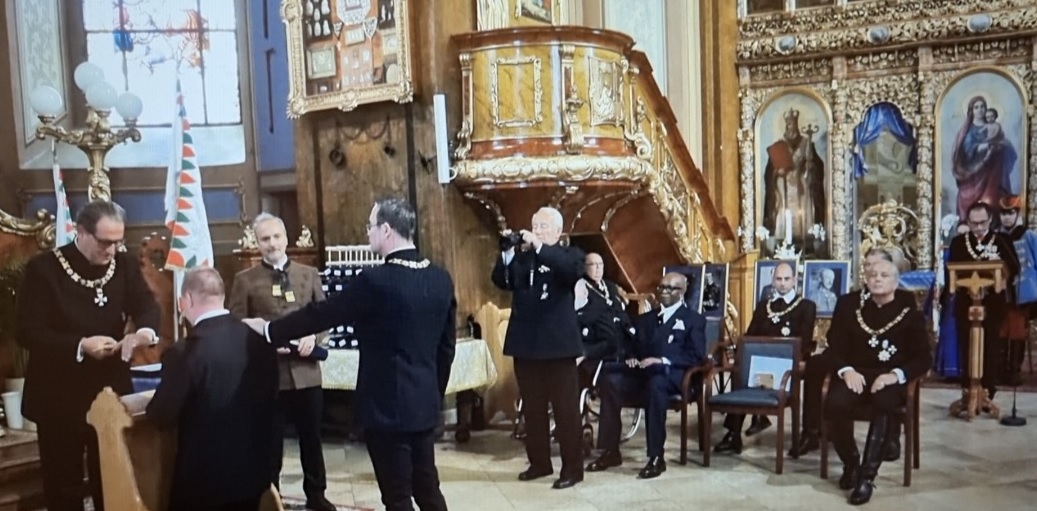 Dubbing of Róbert Mórocz in Máriapócs in 2022
This image captures a solemn and highly prestigious moment when Róbert was officially dubbed a knight of the Order of Vitéz. The act of dubbing is performed directly by Archduke Joseph Karl von Habsburg-Lorraine, Crown Prince of Hungary and Captain General of the Order, in an authentic sacred setting that underscores the spiritual dimension of this tradition. In the photograph, we see the traditional ceremony during which the Archduke, in ceremonial uniform with the order's insignia, bestows the symbols of knighthood. The presence of other high-ranking officials of the order and the historical backdrop of the church complete the atmosphere of continuity, linking the modern era with the legacy of ancestors. For the House of Mórocz de Nagyabony, this moment represents an important milestone in the official confirmation of their place among the European noble elite. This act is not merely a formal recognition of merit, but also a public commitment to the values of faith, nation, and family, which the Order of Vitéz, under the patronage of the House of Habsburg-Lorraine, has guarded and developed for over a century.
Admission required at least a small Medal for Bravery (Vitézségi Érem) from the Great War, though this was only the minimum requirement. The First Class medal was highly esteemed. Admission included formal knightly status and the granting of land, whereby the title was hereditary and passed to the eldest son.
Today, the Order is under the patronage of the House of Habsburg-Lorraine and ranks among the most recognized chivalric organizations in the world. The legitimate Order of Vitéz is a legal entity within the European Union, registered in the Kingdom of Sweden. It proudly stands on traditional European Christian values and is internationally recognized as a highly respected ideological community.
The Order is headed by Archduke Joseph Karl von Habsburg-Lorraine, Crown Prince of Hungary. Archduke Joseph August von Habsburg-Lorraine became the first knight of the restored order in 1920. The Order of Vitéz promotes the fundamental values of faith, nation, and family, based on Christian principles and the highest ethical standards. It adheres to conservative ideals and does not engage in modern politics.
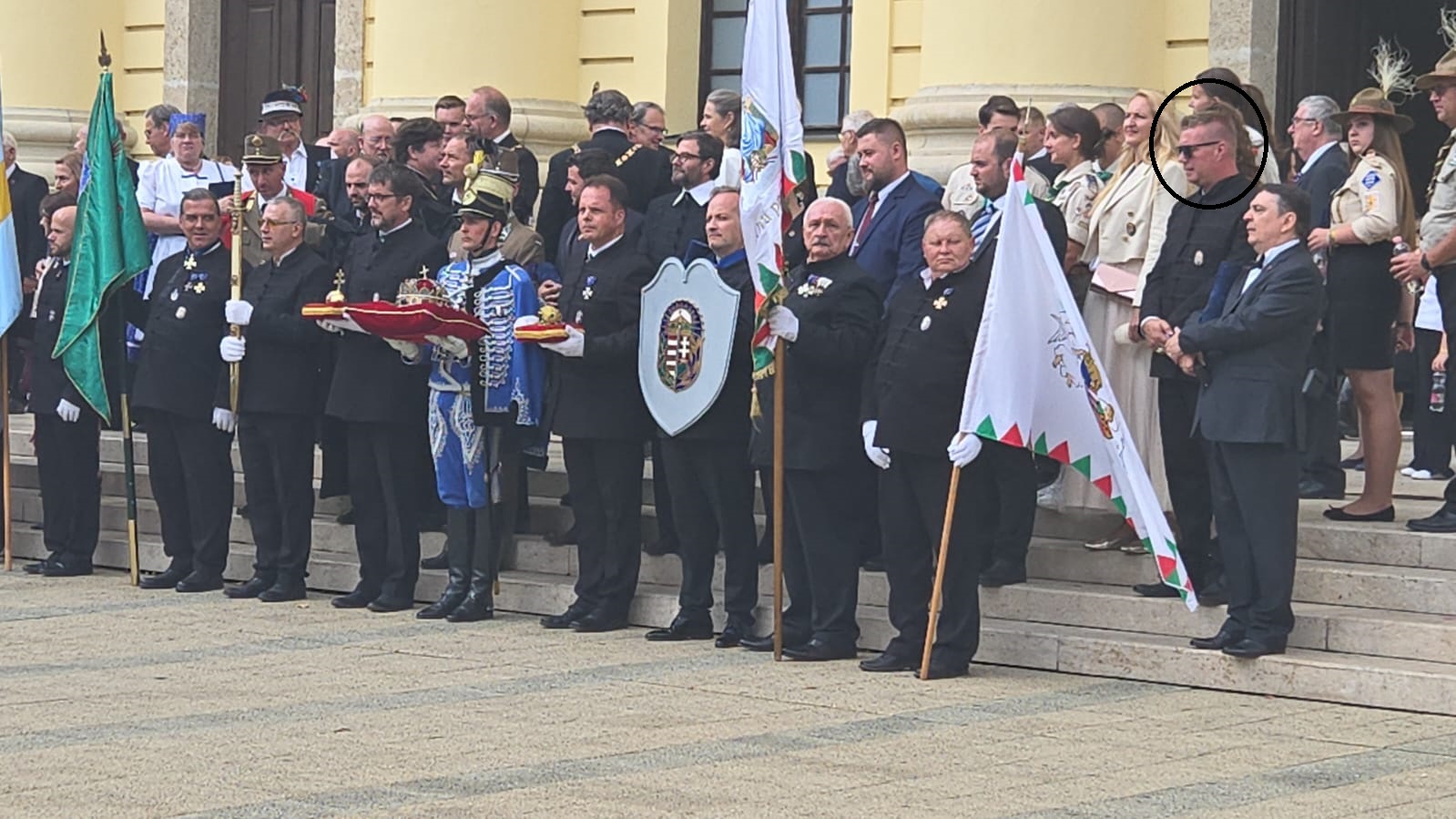 Vitézavatás 2025 (Debrecen) - Róbert Mórocz
This shot documents the ceremonial moments from the Vitézavatás 2025 event in Debrecen, Hungary, which ranks among the pinnacle events in the calendar of European chivalric orders. The photograph captures members and dignitaries of the Order of Vitéz in full ceremonial regalia and uniforms, lined up in front of a historic building, underscoring the majesty and deep social significance of the ceremony. In the right part of the frame (marked in the circle) is Róbert, who as a rightful knight actively participates in this prestigious assembly. His participation in such a significant international event is clear evidence that the House of Mórocz de Nagyabony firmly maintains its place in the circles of contemporary aristocracy and actively represents the Slovak-Hungarian noble heritage at the European level.
Origin of the Surname Mórocz
The family Mórocz de Nagyabony proudly traces its roots back to the period of the Árpádian Kingdom of Hungary. The surname Mórocz originates from the given name Mauricio (Maurice). The ancestors of the family settled on the Rye Island (Žitný ostrov) in an area called Abony, as descendants of castle warriors who were granted land for faithful military service.
The first documented direct ancestor from the 15th century was Michal de Nagyabony, a nobleman from Nagyabony (Veľké Blahovo). His son Mauricio de Nagyabony is considered the direct ancestor of the family, and Mauricio's son Benedikt was the first to consistently use the surname Mórocz at the beginning of the 16th century.
Historical Origins of the House of Mórocz de Nagyabony
The family Mórocz de Nagyabony belongs to the old Hungarian nobility (régi nemes család), whose identity has been linked for centuries with the land and military service. Their history begins as early as the 12th century, when the early ancestors of the house arrived as free warriors during the reign of King Stephen III and received a gift of land called Abony. This act established the influential Abony clan, from which all medieval related families of Nagyabony gradually emerged. They received formal confirmation of their noble status and privileges in 1299 directly from King Andrew III.
Their noble predicate de Nagyabony (of Nagyabony) is a historical testament to the continuous ownership of manors and estates in one of the oldest villages of the Csallóköz region. The exceptional nature of the lineage is confirmed by the fact that they held the Abony/Nagyabony land under their power continuously from the 12th century until the abolition of serfdom in the 19th century.
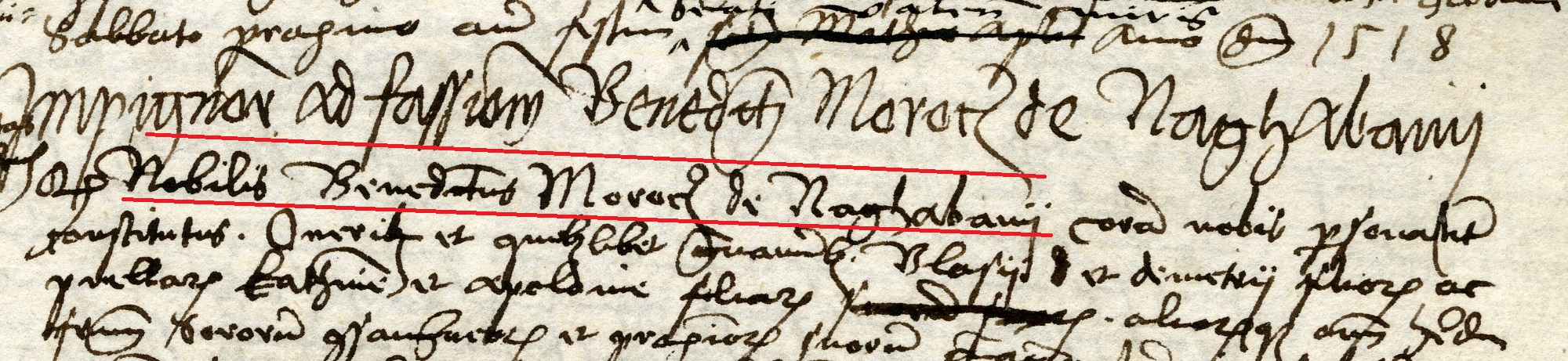 1518 - Benedictus Morocz de Nagyabony
A record of the Bratislava (Pozsonyi) Chapter from 1518 regarding a property mortgage, mentioning Benedictus Morocz of Nagyabony, which proves that the Mórocz family held estates in Nagyabony even in the pre-Mohács period.
Royal Donation and Division of Lines (1641/1642)
A turning point in the history of the house were the years 1641 and 1642, when King Ferdinand III confirmed the ancestral estates and privileges by royal donation. During this period, the family internally divided into two main branches:
Ambróz's line: Ambróz acted as the primary donatary, thereby strengthening the family's position as significant landowners in Nagyabony.
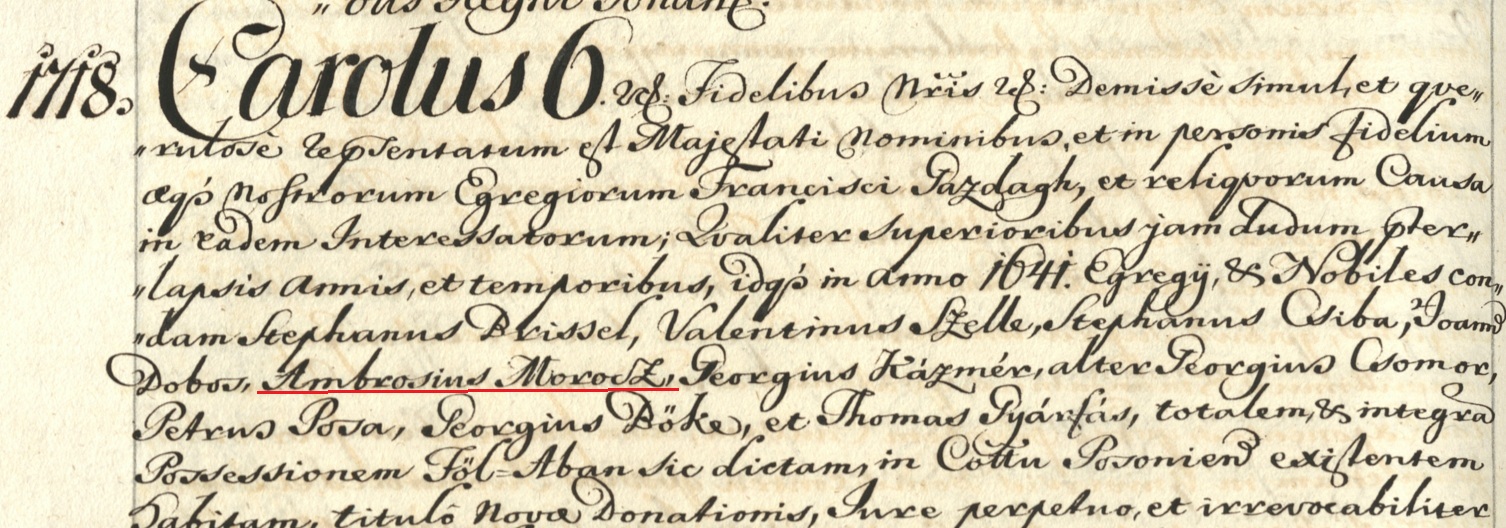 Nova donatio 1641 Ambróz Mórocz
This period Latin document, dated 1718, is a key testament to the noble status and property claims of the Mórocz family. In the text, which refers to the original donation from 1641, the name of the ancestor Ambrosius Morocz (underlined with a red line) is clearly identifiable. Of particular importance is the collective designation of the persons in the list as Egregij & Nobiles (Illustrious & Noble), located on the line directly above Ambróz's name. This connection confirms their high social status and the direct recognition of their noble privileges by the sovereign. The document further specifies that it concerns the holding of estates in the locality of Föl-Aban (Nagyabony) in the Pozsony County (Comitatu Posoniensi), which King Ferdinand III granted in perpetuity.
From the Walls of the Végvár to Expansion into Jahodná
Nagyabony played a crucial role in the Végvár defense system. The Mórocz family stood on the front line of defense against Ottoman expansion, for which their family coat of arms was enriched with symbols of valor – an armored arm with a sword.
With growing influence, the family also expanded into surrounding settlements, creating an important branch from Jahodná (Eperjes). It was this line that preserved a strong awareness of its roots, which led in the 19th century to the re-official confirmation of their ancient status and the right to the predicate de Nagyabony.
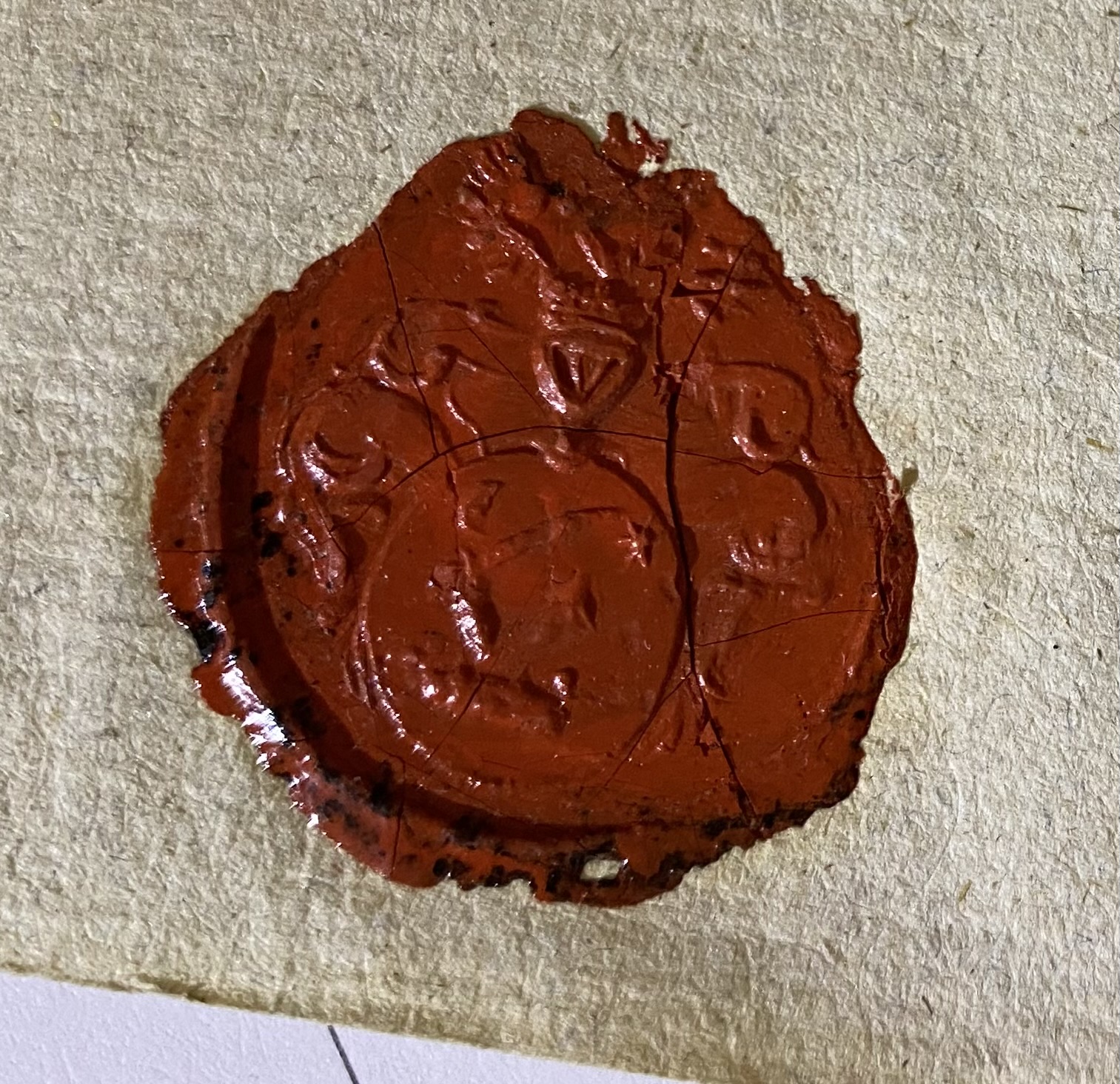 Family seal with coat of arms from 1823
The martial traditions of the family Mórocz de Nagyabony are deeply rooted in their heraldic symbolism. This historic wax seal is an authentic testament to the valor and knightly virtues that the ancestors of the house demonstrated on the battlefields. The central element of the coat of arms captured by the seal is an armored arm with a sword – a symbol of readiness to defend the country and Christian values, thereby referring to the significant role of the family in the Végvár defense system. An important element of the heraldic composition is the crest, consisting of eagle wings emerging from a crown above the helmet. In the crest, besides the eagle wings, there are other important symbols – a star and a moon, which complete the overall composition and underscore the ancient nature and noble status of the house.
The Essence and Tradition of True Nobility
According to the manual of Hungarian customary law from 1517, true nobility was acquired primarily through military service and extraordinary merit, which the sovereign confirmed by granting estates. This status was attained through military discipline, spiritual virtues, and physical prowess. Everyone whom the sovereign endowed with a castle, town, or village was released from the yoke of serfdom and gained personal freedom, which was synonymous with nobility.
The sons of such nobles were deservedly designated as heirs and free men, being subject to no one except the power of the crowned sovereign. However, nobility could also be acquired without the granting of property – by the sole decision of the King to include a person in the estate of the true nobles of the realm. This exceptional social status was hereditary by the sword (in the male line) and could only be revoked by the sovereign, and only under very grave circumstances.
Although this privileged class no longer exists today in the original sense of the word, being a descendant of the nobility remains something exceptional. The possession of a coat of arms, the knowledge of one's genealogy, and the deeds of one's ancestors literally obligate one to strive to be a better person and to at least partially approach the ideal of a true nobleman in the modern world.
 Hungarian nobleman
This period portrait captures a Hungarian nobleman in typical ceremonial attire, which was a symbol of power, pride, and social standing. The figure is clad in a richly decorated coat with fur trimming and firmly grips a saber at his side, which was an indispensable attribute of a true nobleman ready to defend his motherland and family honor.
Ambróz's immediate family
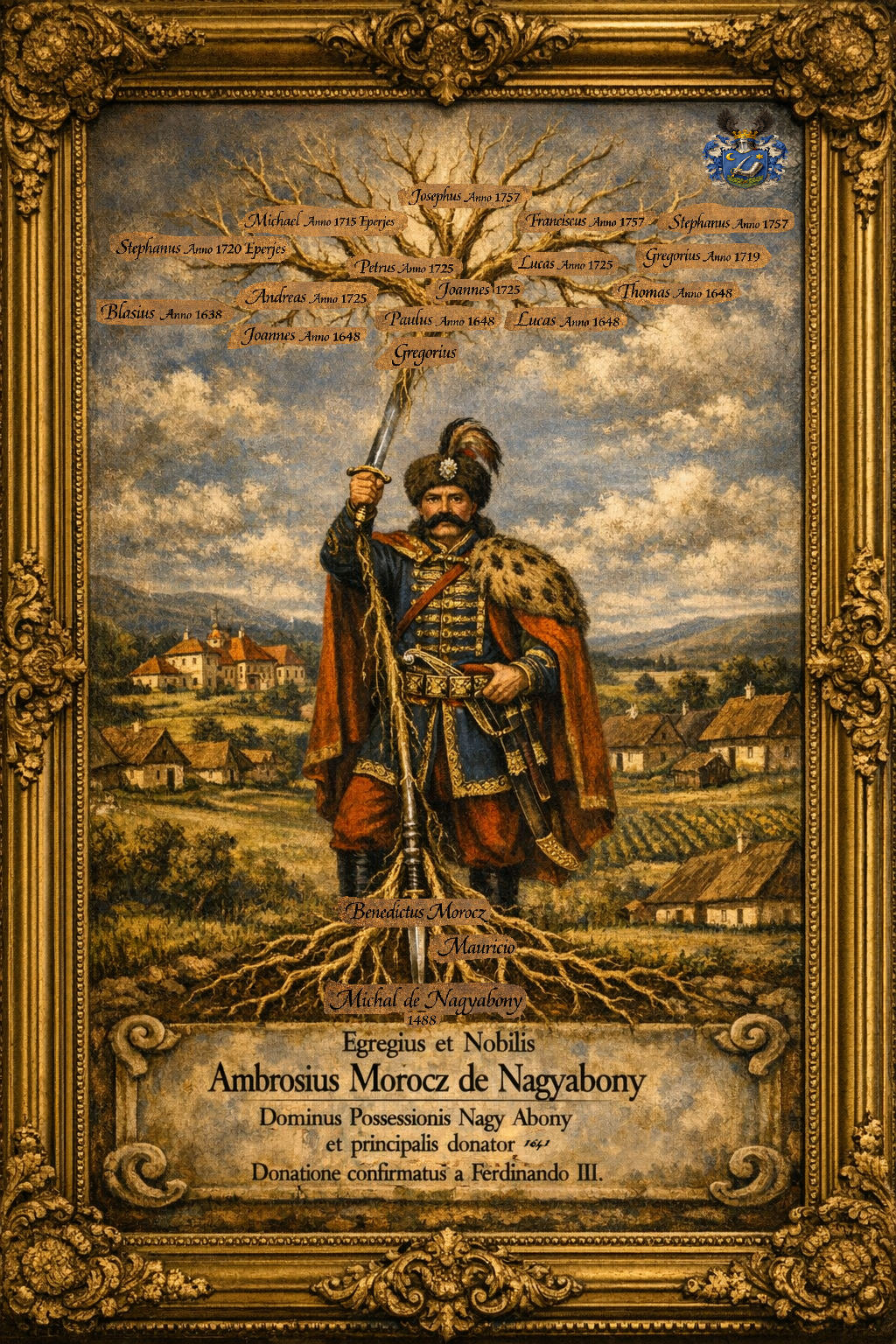 Genealogy of Ambróz Mórocz de Nagyabony
This magnificent representational painting captures the deep history and continuity of the House of Mórocz de Nagyabony. In its center stands a majestic figure of a nobleman in traditional armor and a 'mentieka' (pelisse) with leopard skin, firmly gripping a sword in his hand, symbolizing knightly honor and the defense of ancestral estates. The figure emerges directly from the roots of the family tree, which begins with the names Michal de Nagyabony (1488), Mauricio, and Benedictus Morocz. The painting is dedicated to the legacy left by Ambrosius Morocz de Nagyabony, designated by the titles Egregius et Nobilis. The text at the bottom confirms his status as the Lord of Nagyabony and the primary donatary, whose estates and rights were officially confirmed by King Ferdinand III in 1641. In the crown of the sprawling tree are inscribed other prominent members of the house from various lines, including the branch from Jahodná (Eperjes), citing the years that document the family's expansion in the 17th and 18th centuries. The background of the painting is completed by a period panorama of the landscape with ancestral seats and manors, underscoring the status of the house as 'bene possessionati' (propertied nobility). In the upper right corner is placed the family coat of arms with the crest of eagle wings, a star, and a moon, thus concluding the heraldic and genealogical narrative of this work of art. The painting serves as a visual chronicle, linking the historical donations of sovereigns with the proud identity of contemporary descendants.
video 1: the dubbing of Róbert as a hereditary knight (Vitéz) by Archduke Joseph Karl von Habsburg-Lorraine
video 2: the dubbing of Róbert as a hereditary knight (Vitéz) by Archduke Joseph Karl von Habsburg-Lorraine
video 3: highlights of the ceremony in Máriapócs
 Róbert Mórocz v Máriapocsi
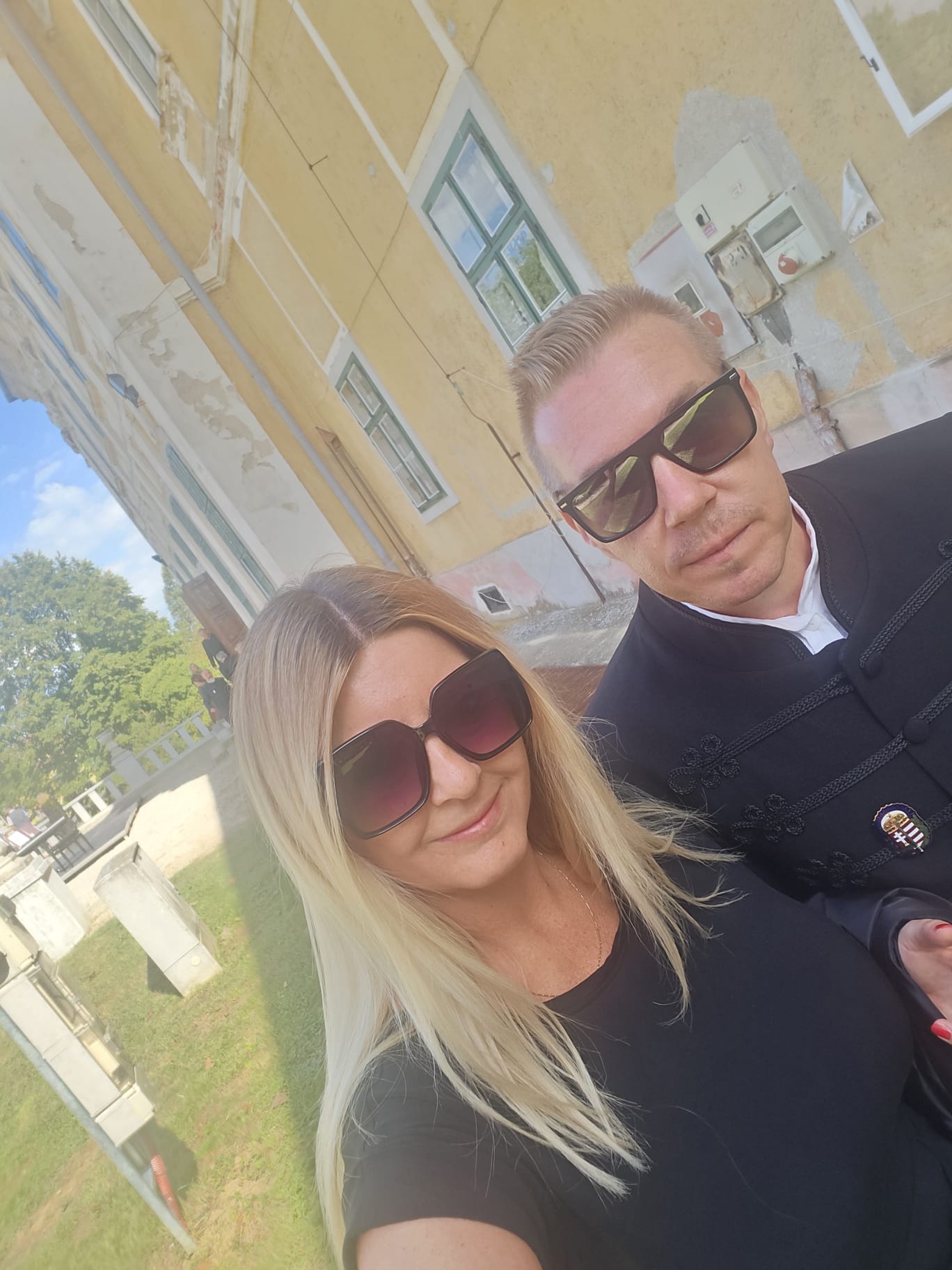 Andrea a Róbert Mórocz (Szentgotthárd 2026)
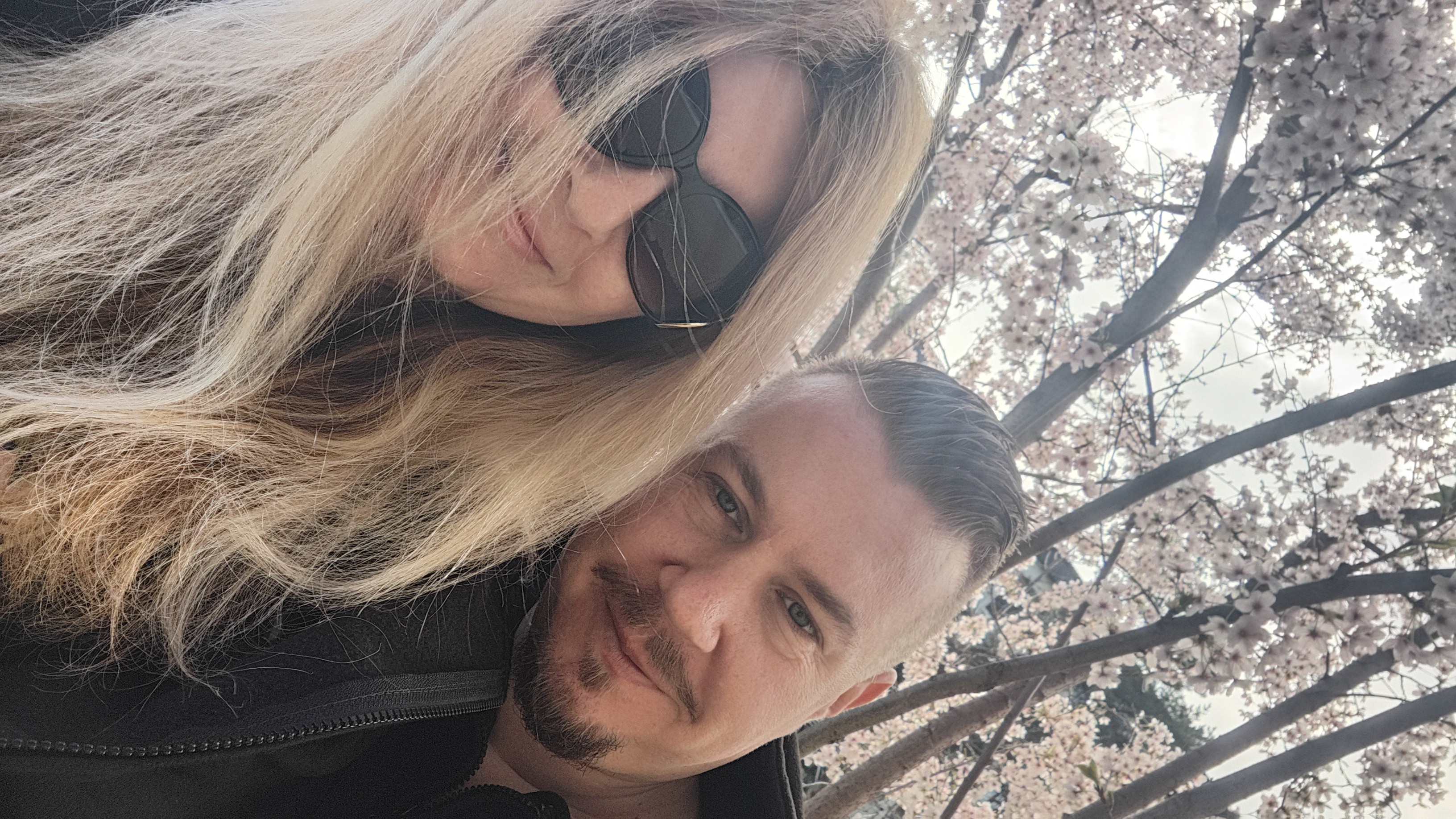 Andrea a Róbert Mórocz
 Andrea a Róbert Mórocz
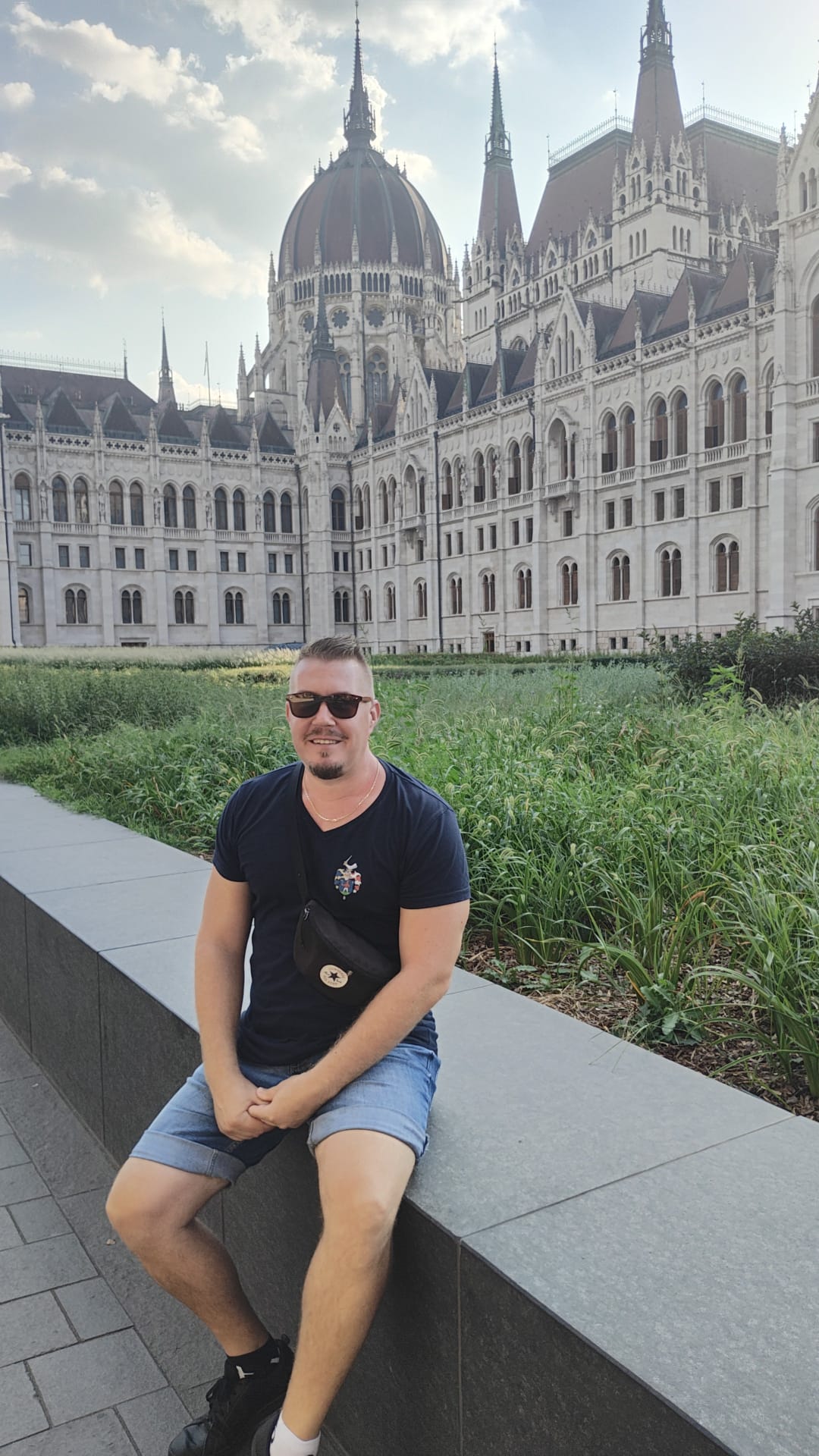 Róbert Mórocz
 Andrea a Róbert Mórocz
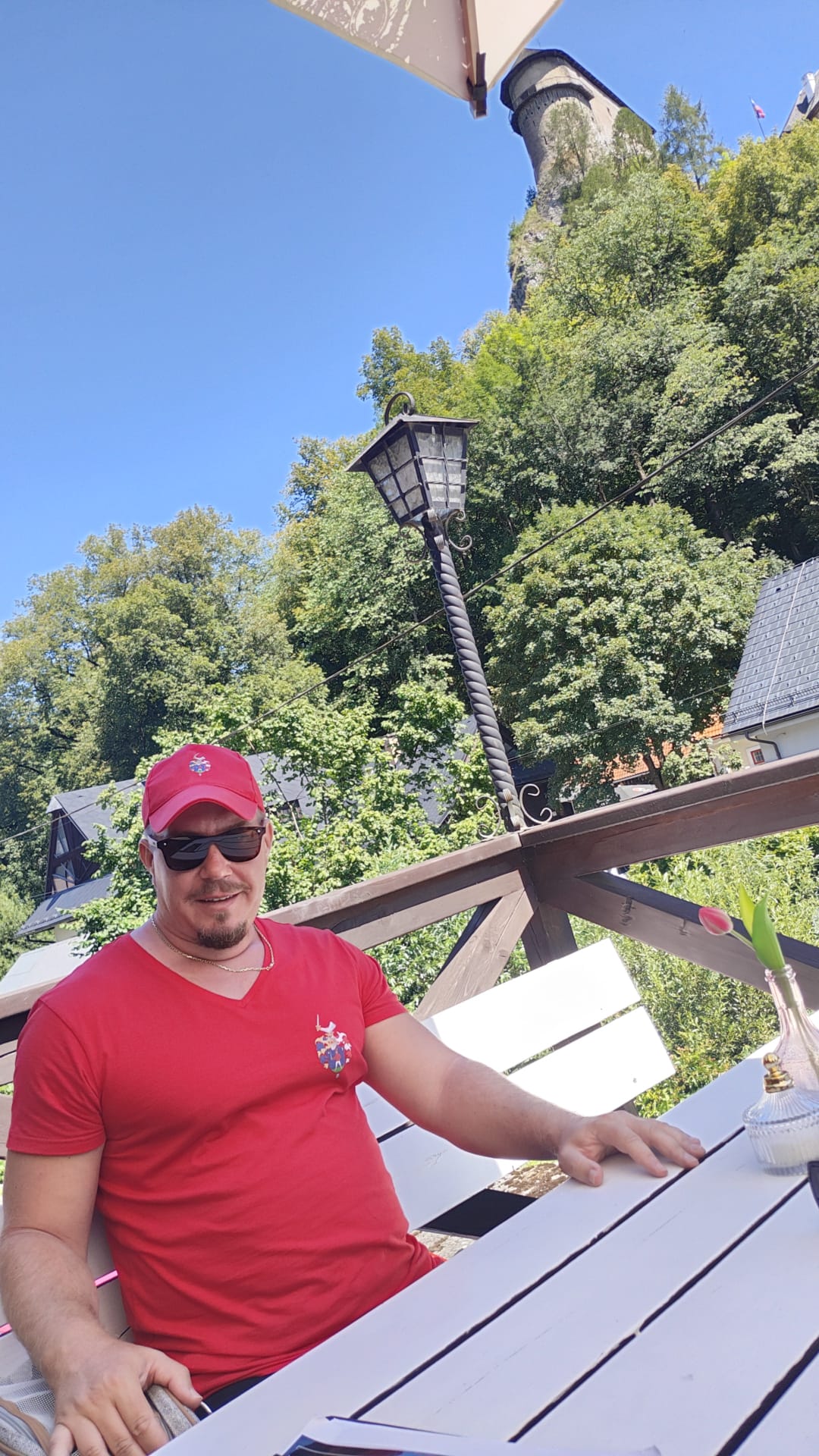 Róbert Mórocz
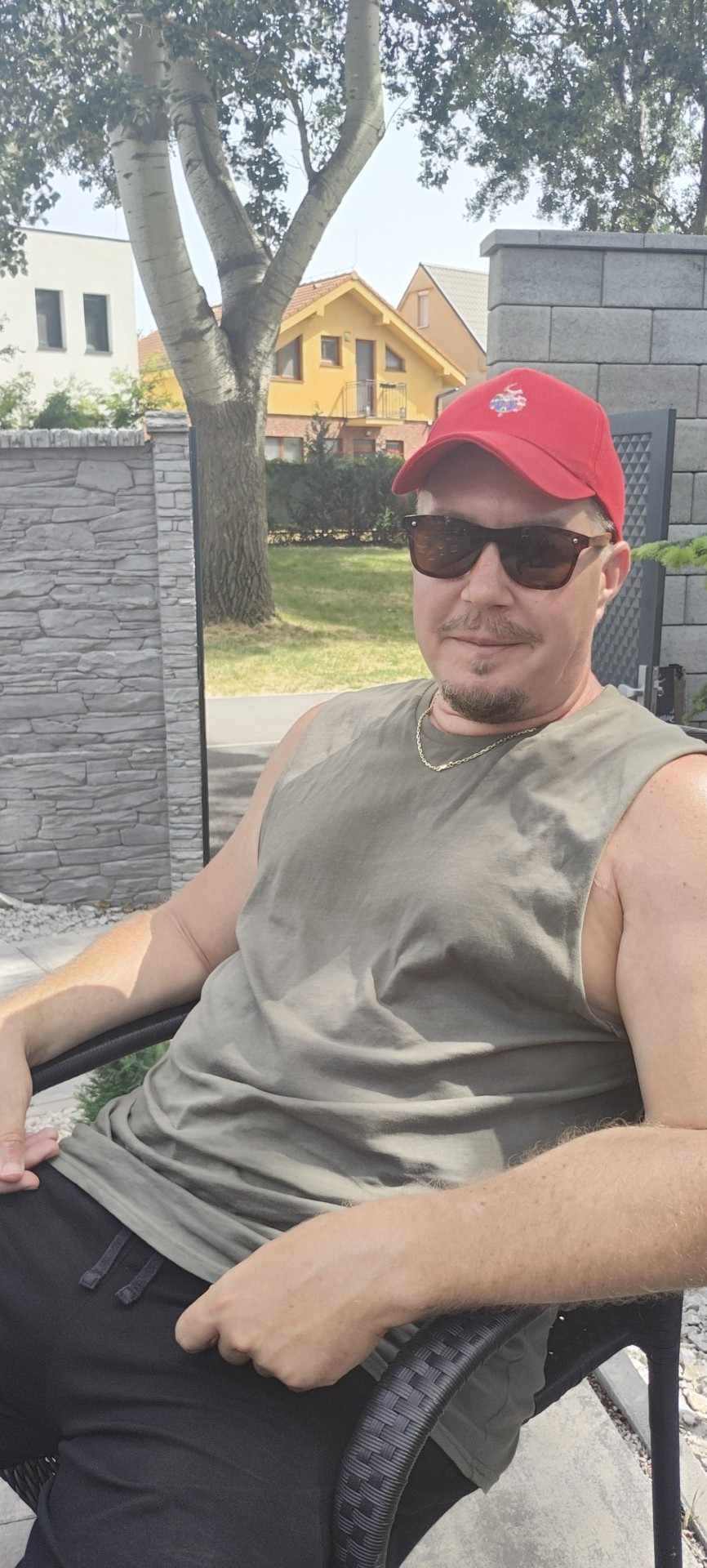 Róbert Mórocz
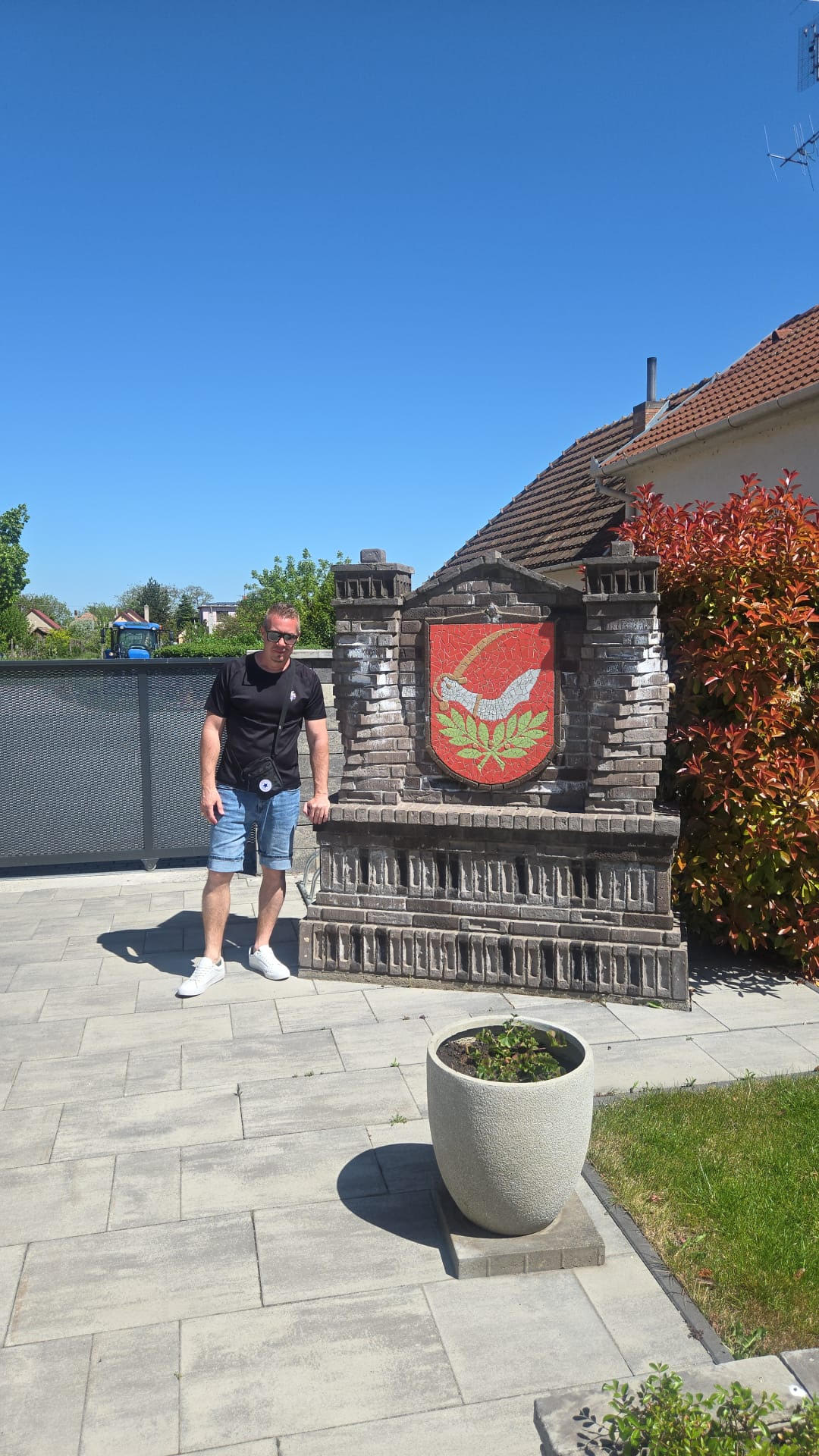 Róbert Mórocz at the monument of the Nádvár fortification in Veľké Blahovo
 Róbert Mórocz
Inquire / Share
Would you care to share your knowledge regarding the House of Mórocz de Nagyabony, or do you have inquiries concerning this lineage? Pray, send us a message.